
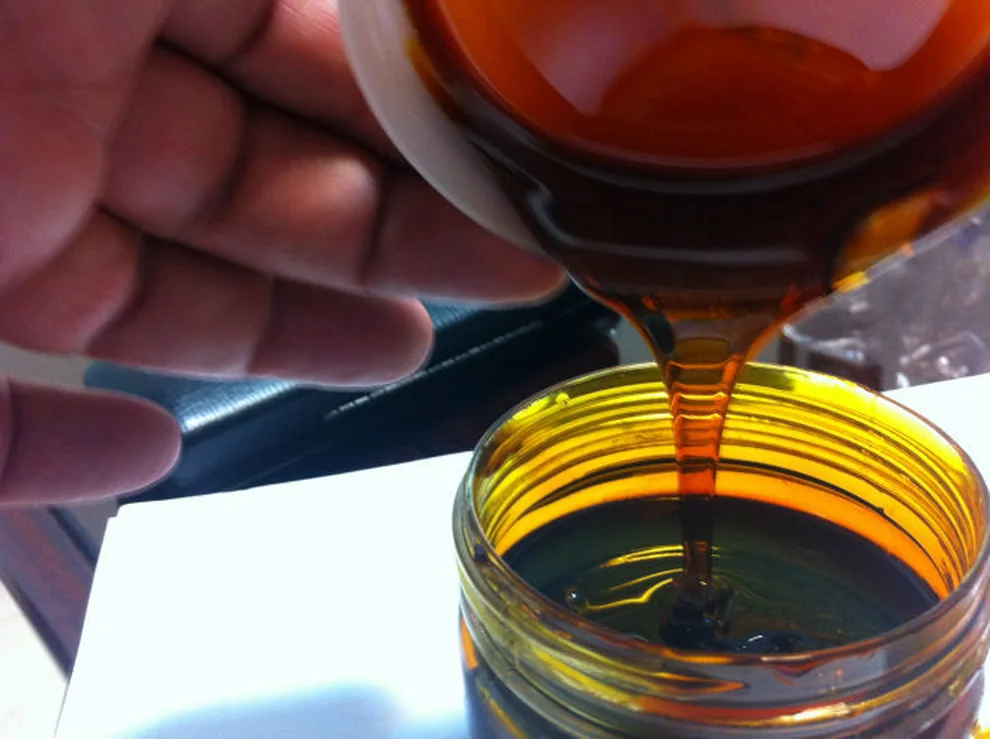
What is Asphalt rubber oil modified bitumen blended flux oil?
Asphalt rubber oil , modified bitumen blended flux oil ,Technology of asphalt pavements by rubber it started 170 years ago, with an experiment involving natural rubber with bitumen in the 1840s , attempting to capture the flexible nature of rubber in a longer lasting paving surface. Now a days especially rubber process oil use instead of natural rubber for bitumen rubber blend as Extender oil for pavement.
Nowadays the rubberized asphalt technology is being adopted in many other parts of the world:
Taiwan is pioneer in asphalt mixtures for flexible pavement rehabilitation; furthermore, rubberized oil asphalt has been trialed in Beijing and for use in new and maintenance work as part of the preparation for the 2008 Olympics in China and it has also been used in Eco Park Project in Hong Kong.
Bitumen flux rubber blended oil
Based on first positive experiences also Brazil and Sudan are strongly investing in the application of this technology for road pavements. Modified bitumen increase viscosity of bitumen flux rubber blended oil should blend with penetration bitumen grades 60/70 or 80/100 to provide a product with a particular viscosity and other prescribed properties.
This product is well know as Extender Oil – Bituminous Oil – Bitumen Oil – Modified Bitumen Oil – Asphalt Rubber Oil – Bitumen Blend Tire Oil.
Additionally, the use of bitumen flux rubber blended oil has shown promising results in enhancing the flexibility and crack resistance of road pavements, particularly in regions with extreme weather conditions. The incorporation of this innovative technology in road construction projects not only improves the overall quality of infrastructure but also contributes to safer and more sustainable transportation networks.
A: Asphalt oil is a specialized petroleum-derived extender or flux oil used in the production of rubberized asphalt and bitumen blends. It improves the compatibility of rubber additives with bitumen and increases pavement flexibility, durability and performance.
A: It acts as a flux agent or extender that lowers the viscosity of bitumen, enhances rubber dispersion, improves binder-aggregate interaction, and enables the formation of more resilient flexible pavement mixtures under dynamic loading and thermal stress.
A: Key specifications often include moderate to high viscosity at elevated temperatures, a compatibility index with bitumen grades (e.g., penetration and softening point behaviour), low moisture content, good thermal stability, and a formulation suited for blending with penetration-graded bitumen such as 60/70 or 80/100.