
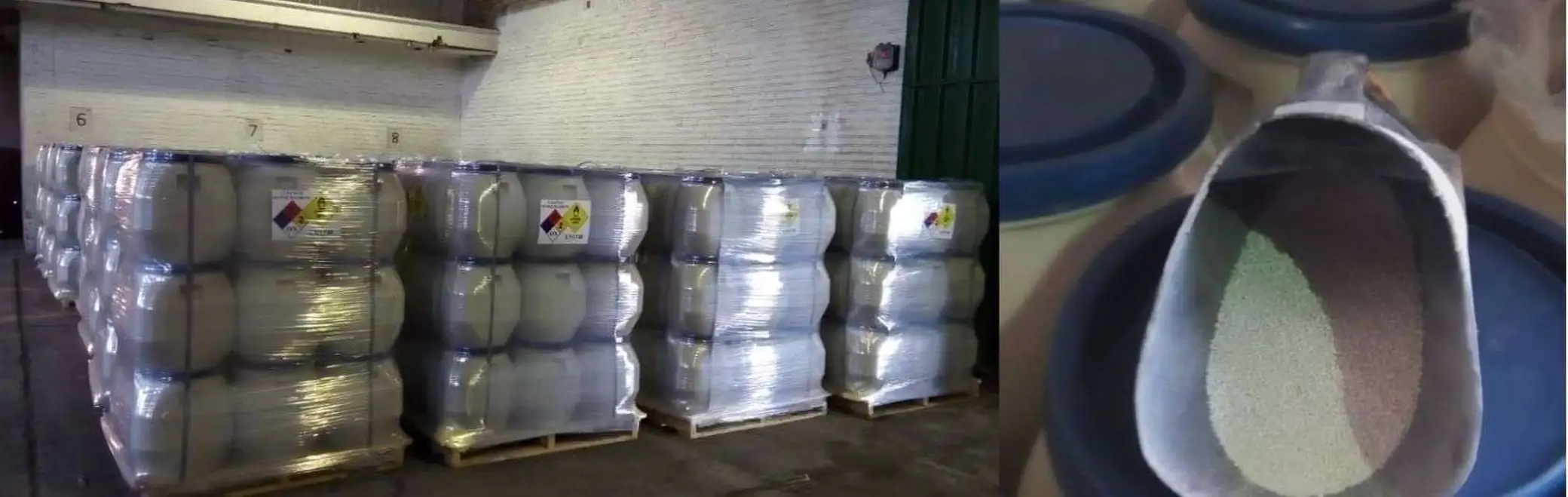
Granular per chlorine
chlorine per which is in granular form by the chemical name of calcium Hypochlorite which is solid chlorine is using to disinfect drinking water and pool water also hospital and bleaching. It is used in many parts of the world to purify water.
To make sure that the water is safe, a small residual amount, typically about 1 part per million (ppm), of chlorine is left in the water.
It has been found that even this small amount of chlorine can cause fading of chlorine-sensitive fabric dyes. In a typical wash, there is usually enough soil on the fabrics to scavenge residual chlorine and minimize damage to chlorine-sensitive dyes.
However, in the rinse the soil levels are greatly reduced, as is the pH, and chlorine-sensitive dyes can ~ fade after multiple laundering cycles.
It is also more; aggressive to dyes at a lower PH.
Thus, the fading of fabric colors over time is a result of both the high pH of typical granular laundry detergents and the presence of residual it – in the wash and rinse water.
Packaging of Calcium hypochlorite
We are filling the calcium hypochlorite in the form of granules in 25 and 45-kg barrels
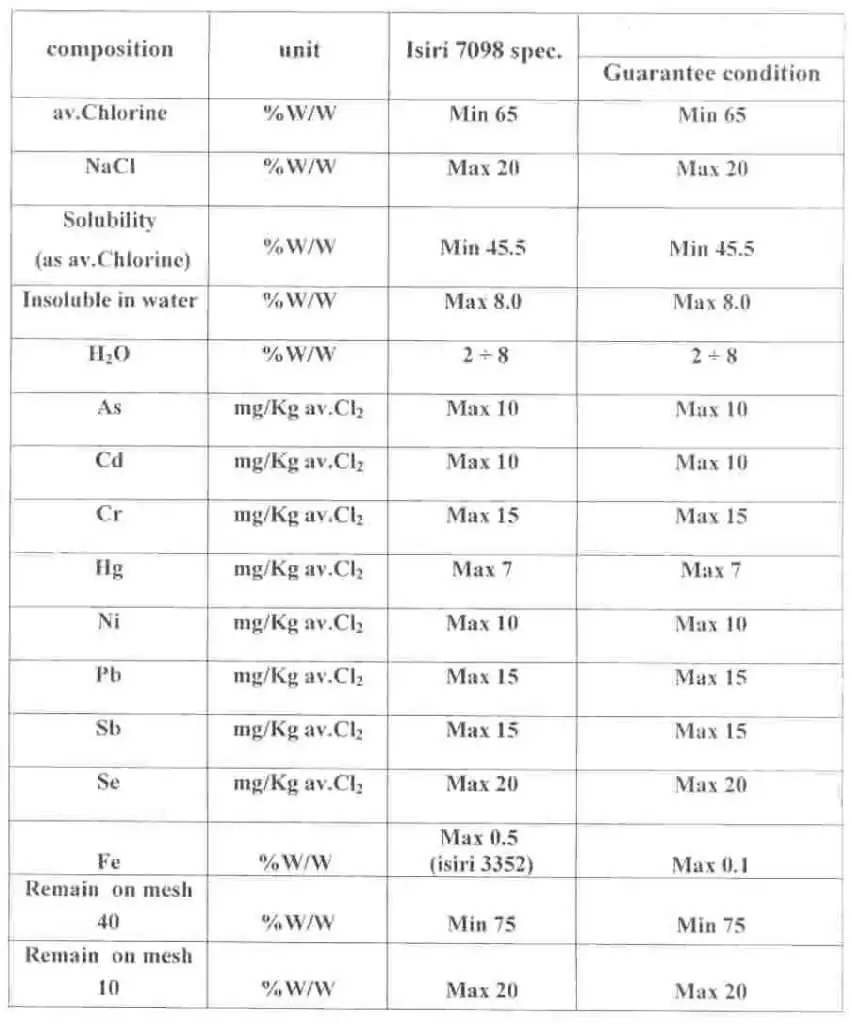
Specification of product
 How do you adjust the PH level in a pool?
The most common liquid acid used to lower the pH is muriatic acid, also known as hydrochloric acid. To raise the PH, soda ash (sodium carbonate) is normally used.
Sodium bicarbonate (baking soda) should be used to raise alkalinity; it can be used to raise PH only if the alkalinity is low. In case you have more question regarding chlorine please feel free to contact us.