
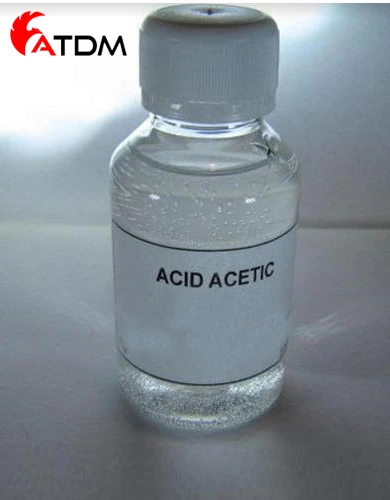
Acetic Acid is an important industrial chemical that serves manufacturers across many sectors. Companies use it in chemical production, textiles, plastics, pharmaceuticals, food processing, coatings, adhesives, and many other applications. Its strong reactivity, reliable performance, and wide industrial compatibility make it an essential raw material in international trade.
ATDM supplies Acetic Acid for industrial and commercial requirements. We focus on reliable sourcing, suitable packaging, consistent product quality, and efficient export services for international buyers. Customers can request technical specifications, packing options, documentation, and commercial quotations according to their destination and required quantity.
Acetic Acid Properties and Characteristics
Acetic acid has the chemical formula CH₃COOH. It belongs to the carboxylic acid family and appears as a clear, colorless liquid under normal conditions. Concentrated grades have a strong and characteristic acidic odor.
Manufacturers value this chemical because it mixes well with water and several organic solvents. In addition, it participates in many important chemical reactions. Therefore, industries use it both as a direct processing chemical and as a raw material for producing other compounds.
Important characteristics include:
Clear and colorless appearance
Strong acidic nature
High water solubility
Useful solvent properties
High chemical reactivity
Wide industrial compatibility
Reliable performance in synthesis processes
However, concentrated material requires careful handling because it can cause serious irritation and chemical burns.
Industrial Grades
Suppliers offer different concentrations and grades according to the intended application. Buyers should always select the product based on purity requirements, production processes, and applicable industry standards.
Glacial Acetic Acid
Glacial Acetic Acid refers to highly concentrated material, generally containing around 99% or more acetic acid. Manufacturers use this grade extensively in chemical synthesis and industrial processing.
The term “glacial” comes from its ability to form ice-like crystals when the temperature falls near its freezing point.
Because of its high concentration, industries use glacial grade when they need controlled chemical reactions, high purity, and minimal water content.
Diluted Grades
Some applications require lower concentrations. Manufacturers can use diluted solutions for specific processing, cleaning, pH adjustment, or formulation purposes.
Consequently, buyers should confirm the required concentration before placing an order.
Major Uses of Acetic Acid
The chemical industry consumes large quantities of this material because it acts as an important intermediate in many manufacturing processes.
Vinyl Acetate Monomer Production
One of the largest industrial applications involves the production of vinyl acetate monomer, commonly known as VAM.
Manufacturers use VAM to produce polymers and copolymers for:
Adhesives
Paints
Coatings
Construction materials
Textile products
Paper treatments
Therefore, demand from polymer and adhesive industries strongly influences global consumption.
Acetic Anhydride Manufacturing
Chemical companies also use acetic acid to manufacture acetic anhydride. This intermediate supports the production of cellulose acetate, pharmaceutical ingredients, coatings, and other specialty chemicals.
As a result, chemical manufacturers often require stable purity and reliable supply when purchasing bulk quantities.
Acetate Ester Production
Industries react acetic acid with different alcohols to produce acetate esters.
Common examples include:
Ethyl acetate
Butyl acetate
Propyl acetate
Isopropyl acetate
These solvents play important roles in paints, inks, coatings, adhesives, cleaning compounds, and chemical formulations.
Use in Textile Manufacturing
The textile industry uses this acid during several processing stages. Manufacturers can use controlled quantities to regulate pH during dyeing and finishing operations.
For example, textile processors may use it to neutralize alkaline residues after certain treatments. Proper pH control can improve dye consistency and help manufacturers maintain predictable processing conditions.
However, operators must control dosage carefully because excessive acidity can affect textile materials or production equipment.
Applications in Paints, Coatings and Adhesives
Paint, coating, and adhesive manufacturers depend on several acetate-based chemicals. Since acetic acid acts as an important feedstock for producing these compounds, it plays an indirect but significant role throughout the coatings industry.
Manufacturers use acetate derivatives in:
Industrial coatings
Printing inks
Wood coatings
Automotive finishes
Packaging adhesives
Construction adhesives
Therefore, reliable raw material quality supports consistent downstream production.
Food Industry Applications
Food manufacturers use approved food-grade forms as acidity regulators and preservatives in suitable applications. Vinegar naturally contains dilute acetic acid, which provides its characteristic sour taste and acidic properties.
Food processors may use controlled concentrations for:
Acidity adjustment
Pickling
Food preservation
Flavor development
Sauce manufacturing
However, food applications require appropriate food-grade material and compliance with applicable regulations. Industrial-grade material should not replace food-grade products.
Pharmaceutical Industry
Pharmaceutical manufacturers use high-purity grades in selected synthesis and formulation processes.
For instance, the chemical can participate in producing pharmaceutical intermediates and other organic compounds. Laboratories also use controlled solutions for analytical or manufacturing processes.
Because pharmaceutical applications demand strict quality standards, buyers should request suitable specifications and documentation before use.
Plastics and Polymer Production
The plastics and polymer industries represent another important market.
Through derivatives such as vinyl acetate and acetate compounds, this chemical contributes to manufacturing:
Polyvinyl acetate
Vinyl acetate copolymers
Cellulose acetate
Specialty resins
Polymer emulsions
These materials later enter products such as adhesives, films, coatings, textiles, and packaging materials.
Consequently, the chemical serves as an important link between basic chemical production and finished industrial products.
Cleaning and Industrial Processing
Some industrial cleaning processes use controlled acidic solutions to remove alkaline deposits or support surface treatment operations.
In addition, manufacturers may use the product for pH control during processing. Nevertheless, companies must evaluate equipment compatibility before use.
Strong acids can attack certain metals and materials. Therefore, operators should always follow appropriate technical and safety procedures.
Typical Acetic Acid Specifications
Specifications can vary according to grade, concentration, producer, and customer requirements. Buyers should always review the actual Certificate of Analysis before confirming acceptance.
Typical commercial properties may include:
| Property | Typical Description |
|---|---|
| Chemical Formula | CH₃COOH |
| Appearance | Clear, colorless liquid |
| Odor | Strong, characteristic acidic odor |
| Purity | Grade dependent |
| Solubility in Water | Completely miscible |
| Molecular Weight | Approx. 60.05 g/mol |
| Acidity | Strongly acidic |
| Grade Options | Industrial / high purity / application-specific |
ATDM can provide relevant technical documentation based on the available product and shipment requirements.
Packaging Options
Proper packaging protects product quality and improves safety during storage and transportation.
Depending on concentration, quantity, origin, and customer requirements, commercial packaging may include suitable chemical-resistant drums, intermediate bulk containers, or bulk transportation systems.
Common options can include:
Chemical-resistant drums
IBC tanks
ISO tanks
Bulk tanker arrangements
Packaging availability can change according to the producer and destination.
Therefore, buyers should confirm the required packing type, net weight, port, and order quantity when requesting a quotation.
Storage and Handling
Companies must store concentrated Acetic Acid carefully.
Keep containers tightly closed and place them in a cool, dry, well-ventilated area. In addition, keep the product away from incompatible substances, heat sources, and materials that can react with strong acids.
Workers should use suitable personal protective equipment. Depending on the operation, this may include chemical-resistant gloves, protective clothing, eye protection, and face protection.
Facilities should also provide suitable ventilation and emergency response equipment.
Moreover, personnel should follow the supplier’s Safety Data Sheet before handling, loading, unloading, or transferring the product.
Transportation Considerations
Concentrated grades require regulated transport because of their corrosive characteristics.
Exporters must select suitable containers and follow applicable transport regulations. Proper labeling, documentation, and packaging help reduce transportation risks.
Importers should also check local regulations before shipment because requirements can differ between destinations.
For international orders, ATDM can coordinate commercial documentation and available export packing according to agreed shipment conditions.
Factors Affecting Acetic Acid Price
The Acetic Acid price changes according to international market conditions. Therefore, buyers should request current quotations rather than relying on fixed historical prices.
Several factors can influence pricing:
Feedstock costs
Production capacity
Regional demand
Plant maintenance or shutdowns
Energy costs
Product concentration
Packaging type
Order volume
Freight rates
Shipping destination
Furthermore, larger bulk orders may follow a different pricing structure from drum or IBC shipments.
When requesting a quotation, buyers should provide the required grade, quantity, packaging, destination port, and preferred Incoterm.
How to Select the Right Grade
Selecting the correct material starts with the final application.
First, determine the required concentration. Next, review limits for water content and other relevant quality parameters. Then, confirm whether the application requires industrial, food, pharmaceutical, or another specialized grade.
Buyers should also consider:
Manufacturing process
Required purity
Packaging
Storage conditions
Regulatory requirements
Destination country
Annual consumption
Required documentation
This approach helps buyers avoid ordering a grade that does not meet their production requirements.
Acetic Acid Supplier for International Markets
ATDM acts as an Acetic Acid supplier for international industrial customers and traders. We support customers that require commercial quantities for chemical manufacturing, textiles, coatings, polymers, industrial processing, and other suitable applications.
Customers can contact ATDM with their required concentration, quantity, packing method, destination, and purchasing terms.
Based on product availability, ATDM can provide commercial information and relevant technical documents for the requested shipment.
Our export-focused approach helps international buyers source chemical raw materials with clear specifications and practical shipping arrangements.
Why Buyers Choose ATDM
Industrial buyers need more than a chemical quotation. They also need proper specifications, suitable packaging, export documentation, and dependable communication.
ATDM focuses on supporting B2B customers throughout the purchasing process.
Our supply services can include:
Commercial quotations
Product specification information
Technical documentation
Export packaging options
Shipping coordination
International supply support
Furthermore, clear communication helps buyers plan their purchasing and logistics more efficiently.
Frequently Asked Questions
What concentration of Acetic Acid is commonly available?
Industrial markets commonly trade several concentrations, while glacial grade generally contains about 99% or more active material. Always confirm the exact specification before ordering.
What is Glacial Acetic Acid?
Glacial grade refers to highly concentrated acetic acid with very low water content. Chemical manufacturers widely use it as a raw material and processing chemical.
What industries use this chemical?
Chemical manufacturing, textiles, paints, coatings, adhesives, plastics, pharmaceuticals, food processing, and several other industries use it directly or through its derivatives.
How should the product be stored?
Store it in compatible, tightly closed containers in a cool and ventilated area. Keep it away from incompatible chemicals and follow the product Safety Data Sheet.
Does ATDM supply Acetic Acid internationally?
Yes. ATDM supplies Acetic Acid for international B2B customers, subject to grade, quantity, packaging, destination, and current product availability.