
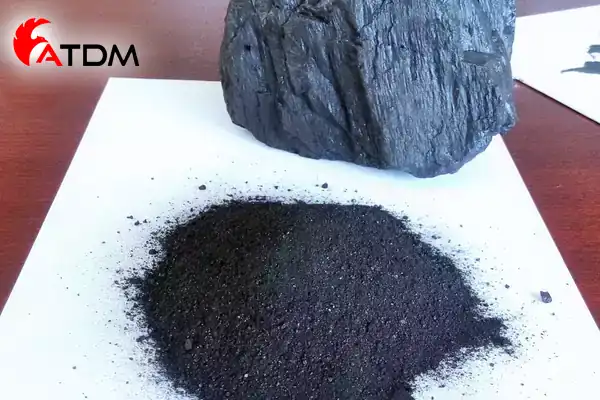
The gilsonite softening point is one of the most critical physical properties used to evaluate the thermal performance and application suitability of gilsonite. Whether used in asphalt modification, drilling fluids, inks, or coatings, understanding the gilsonite softening point helps manufacturers and engineers predict how the material behaves under heat. This directly impacts durability, stability, and overall product performance.
In this comprehensive guide, we explore everything related to the Gilsonite softening temperature, including testing methods, influencing factors, industry standards, and its role across different applications. Along the way, we also incorporate related terms such as gilsonite melting point, thermal properties of gilsonite, bitumen softening characteristics, and gilsonite temperature resistance to provide a well-rounded understanding.
What Is Gilsonite Softening Point?
The gilsonite softening point refers to the temperature at which gilsonite transitions from a solid, brittle state into a softer, more pliable form. Unlike a precise melting point seen in crystalline materials, gilsonite—being a natural hydrocarbon resin—does not melt sharply. Instead, it gradually softens over a temperature range.
This property is essential because it determines:
- Heat resistance of gilsonite-based products
- Storage and handling conditions
- Suitability for high-temperature applications
- Compatibility with other materials like bitumen or asphalt
In most industrial contexts, the gilsonite softening level is measured using standardized test methods to ensure consistency and comparability.
Why Gilsonite Softening Point Matters
Understanding the Gilsonite softening range is crucial for industries that rely on thermal stability. A higher softening point typically indicates better resistance to deformation under heat, which is especially important in demanding environments.
Key Benefits of High Softening Point Gilsonite
- Improved performance in hot climates
- Enhanced durability in asphalt pavements
- Better resistance to flow and deformation
- Increased lifespan of coatings and sealants
Applications Where Softening Point Is Critical
- Asphalt and road construction
- Foundry sands
- Oil and gas drilling fluids
- Printing inks and paints
- Waterproofing membranes
In all these sectors, selecting gilsonite with the right softening point ensures optimal performance.
Standard Test Methods for Gilsonite Softening Point
To determine the gilsonite softening temperature, laboratories use standardized methods that provide accurate and repeatable results.
Ring and Ball Method (ASTM D36)
This is the most widely used method for measuring the softening point of gilsonite and similar materials.
How it works:
- A sample of gilsonite is placed in a metal ring
- A steel ball is positioned on top
- The sample is heated at a controlled rate
- The temperature at which the softened material allows the ball to fall is recorded
This temperature is considered the gilsonite softening level.
Other Testing Techniques
- Mettler dropping point method
- Capillary tube method
- Differential scanning calorimetry (DSC)
Each method offers slightly different insights, but the ring and ball method remains the industry standard.
Typical Gilsonite Softening Point Range
The gilsonite softening point varies depending on the grade and source of the material. Generally, it falls within the following range:
| Grade Type | Softening Point Range |
|---|---|
| Low softening | 140°C – 160°C |
| Medium softening | 160°C – 180°C |
| High softening | 180°C – 220°C |
Higher softening point grades are often preferred for applications requiring superior heat resistance.
Factors Affecting Gilsonite Softening Point
Several factors influence the gilsonite softening point, making it essential to understand the variability.
1. Chemical Composition
Gilsonite consists mainly of hydrocarbons, but variations in molecular structure can affect its thermal properties.
2. Ash Content
Higher ash content may slightly alter the softening behavior, though high-quality gilsonite typically has low ash levels.
3. Volatile Matter
The presence of volatile compounds can reduce the softening point, making the material soften at lower temperatures.
4. Particle Size
While not directly affecting the intrinsic softening point, finer particles may appear to soften faster due to increased surface area.
Gilsonite Softening Point vs Melting Point
A common confusion arises between the gilsonite softening point and the gilsonite melting point. These are not the same.
- Softening Point: Temperature where material becomes pliable
- Melting Point: Temperature where material becomes fully liquid
Since gilsonite is an amorphous material, it does not have a sharp melting point. Instead, it gradually transitions, making the softening point the more relevant parameter.
Impact on Asphalt and Bitumen Modification
One of the most important uses of gilsonite is in asphalt modification, where the gilsonite softening point plays a critical role.
Benefits in Asphalt
- Increases asphalt softening point
- Improves rutting resistance
- Enhances load-bearing capacity
- Reduces temperature susceptibility
By blending gilsonite with bitumen, engineers can significantly improve pavement performance, especially in high-temperature regions.
Role in Drilling Fluids
In oil and gas drilling, gilsonite is used as a fluid-loss control additive. The gilsonite softening point determines how it behaves under downhole temperatures.
Why It Matters
- Prevents premature softening
- Maintains wellbore stability
- Ensures consistent fluid performance
High softening point gilsonite is preferred for deep wells where temperatures are extreme.
Importance in Coatings and Inks
The gilsonite softening point also affects drying time, gloss, and durability in coatings and printing inks.
Performance Advantages
- Better heat resistance
- Improved adhesion
- Enhanced chemical stability
- Longer-lasting finish
Manufacturers often select specific gilsonite grades based on the required softening temperature.
How to Choose the Right Gilsonite Softening range
Selecting the appropriate gilsonite softening point depends on the intended application.
Consider These Factors
- Operating temperature conditions
- Required durability
- Compatibility with other materials
- Processing temperature
For example:
- High-temperature applications → High softening point
- Flexible coatings → Medium softening point
Quality Standards and Specifications
The gilsonite softening point is often specified in technical data sheets and must meet industry standards.
Common Standards
- ASTM D36
- ISO testing methods
- Industry-specific specifications
Reliable suppliers ensure consistent softening point values across batches.
Reliable Supply of Gilsonite
When sourcing gilsonite, consistency in properties like the gilsonite softening point is essential. A trusted supplier such as ATDM ensures high-quality material with controlled specifications, making it suitable for industrial applications that demand precision and reliability.
Storage and Handling Considerations
The natural asphalt softening point also affects storage conditions.
Best Practices
- Store in cool, dry environments
- Avoid direct sunlight
- Prevent exposure to high temperatures
- Use proper packaging
Maintaining conditions below the softening point ensures the material retains its solid form.
Common Challenges and Solutions
Softening During Transport
- Solution: Use temperature-controlled shipping
Inconsistent Performance
- Solution: Source from reliable suppliers with strict quality control
Improper Grade Selection
- Solution: Match softening point with application requirements
Future Trends in Gilsonite Applications
As industries evolve, the importance of the softening point of gilsonite continues to grow.
Emerging Trends
- Advanced asphalt technologies
- High-performance coatings
- Sustainable construction materials
- Enhanced oilfield solutions
Understanding and optimizing thermal properties will remain a key focus.
FAQs About Gilsonite Softening Point
1. What is the typical gilsonite softening point?
It usually ranges between 140°C and 220°C depending on the grade.
2. Why is the asphalt softening point important?
It determines how the material behaves under heat and impacts performance in various applications.
3. How is the natural asphalt softening point measured?
The most common method is the Ring and Ball test (ASTM D36).
4. Does gilsonite have a melting point?
Not exactly. Gilsonite softens gradually rather than having a sharp melting level.
5. Can the softening point be modified?
It can be influenced by blending or selecting different grades.
6. Which industries rely on gilsonite softening range?
Asphalt, oil drilling, coatings, inks, and construction industries all depend on it.
Conclusion
The gilsonite softening point is a fundamental property that defines the thermal behavior and application performance of gilsonite. From asphalt modification to drilling fluids and industrial coatings, this parameter plays a vital role in ensuring stability, durability, and efficiency.
By understanding the factors that influence the softening point, selecting the right grade, and sourcing from reliable suppliers like ATDM, industries can fully leverage the benefits of gilsonite in high-performance applications.