
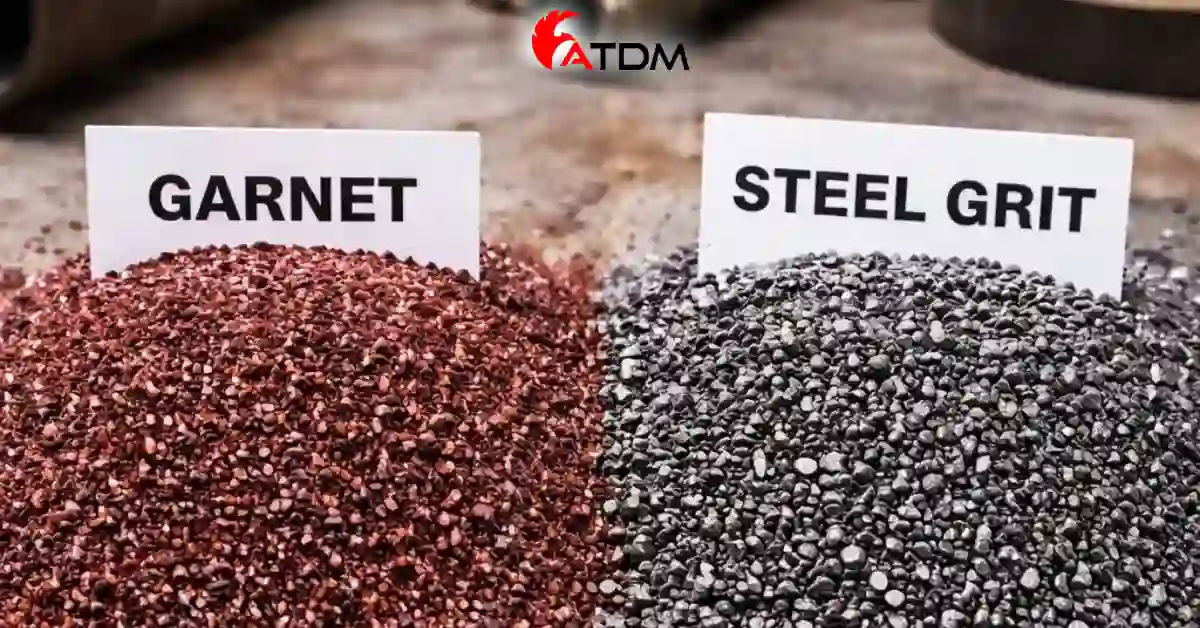
When it comes to industrial surface preparation, the debate around garnet abrasive vs steel grit is one that professionals encounter frequently. Choosing the right blasting media directly impacts efficiency, cost, safety, and environmental compliance. Whether you are working in shipyards, construction, or manufacturing, understanding the comparison between garnet sand and steel grit is crucial for optimal results.
Why Abrasive Selection Matters in Surface Preparation
Selecting the wrong abrasive can lead to poor surface finish, higher operational costs, and even safety risks. Abrasive media determines how effectively coatings are removed, surfaces are cleaned, and materials are prepared for further treatment. This is why comparing garnet blasting media vs steel shot or grit is essential for any project.
Garnet Abrasive vs Steel Grit: Core Differences
Material Composition and Structure
The most fundamental distinction in garnet abrasive vs steel grit lies in their composition. Garnet is a naturally occurring mineral known for its angular shape and sharp edges, while steel grit is manufactured from crushed steel and has a more uniform, metallic structure.
This difference significantly affects how each abrasive interacts with surfaces during blasting.
Hardness and Durability
Steel grit is generally tougher and more durable due to its metallic nature. However, garnet abrasive offers consistent hardness and maintains its cutting edges throughout use. While steel grit may last longer in controlled systems, garnet provides reliable performance in a wider range of environments.
Performance Comparison in Blasting Applications
Surface Finish Quality
In the comparison of garnet abrasive vs steel grit, garnet often produces a smoother and cleaner surface profile. Its sharp edges allow precise cutting without embedding contaminants into the substrate.
Steel grit, on the other hand, tends to create a rougher profile, which may be beneficial in certain heavy-duty coating applications but less desirable for fine finishing tasks.
Cutting Speed and Efficiency
Steel grit is known for its aggressive cutting ability, making it suitable for removing thick coatings or heavy corrosion. However, garnet abrasive delivers a balanced performance, combining effective cutting with minimal surface damage.
In many real-world scenarios, garnet sand proves more efficient due to reduced cleanup and better finish quality.
Dust Generation and Visibility
One major factor in garnet abrasive vs steel grit is dust production. Garnet produces significantly less dust compared to many other abrasives, improving visibility and worker safety.
Steel grit generates less dust than softer abrasives but can still produce airborne particles, especially when breaking down after repeated use.
Cost Analysis: Garnet Sand vs Steel Grit
Initial Cost vs Lifecycle Cost
At first glance, steel grit may appear more cost-effective due to its reusability. However, when evaluating garnet abrasive vs steel grit from a lifecycle perspective, garnet often proves more economical.
Garnet requires less maintenance, reduces downtime, and minimizes disposal costs, making it a smart long-term investment.
Reusability and Consumption Rate
Steel grit can be reused multiple times in closed systems, which is one of its key advantages. However, it gradually loses effectiveness as it breaks down.
Garnet abrasive is typically used as a single-use media, but its high efficiency means less material is needed overall. This balances out the cost difference in many applications.
Environmental Impact and Safety Considerations
Eco-Friendliness of Garnet Abrasive
Garnet is a natural, non-toxic, and environmentally friendly abrasive. It contains minimal free silica, making it safer for workers and compliant with strict environmental regulations.
This makes garnet sand a preferred choice in industries where sustainability is a priority.
Steel Grit and Environmental Concerns
Steel grit is recyclable, which reduces waste in controlled environments. However, it can introduce metallic contamination and requires proper handling to prevent environmental impact.
In open blasting systems, steel grit may not be as eco-friendly as garnet.
Application Suitability Comparison
Marine and Offshore Projects
In marine environments, garnet abrasive is widely preferred due to its non-toxic nature and minimal environmental impact. It ensures compliance with strict offshore regulations.
Steel grit is typically limited to enclosed blasting systems in such settings.
Construction and Infrastructure
For construction projects, both abrasives have their place. Garnet is ideal for precision cleaning and surface preparation, while steel grit is used for heavy-duty tasks requiring aggressive abrasion.
Industrial Cleaning and Maintenance
In industrial maintenance, the choice between garnet abrasive vs steel grit depends on the specific requirements. Garnet is favored for general cleaning and coating removal, while steel grit is used for tougher applications.
Logistics and Handling Differences
Storage and Transportation
Garnet sand is easier to handle, store, and transport due to its non-reactive nature. It does not rust or degrade over time.
Steel grit requires careful storage to prevent corrosion and maintain quality.
Equipment Compatibility
Both abrasives are compatible with standard blasting equipment. However, steel grit is more suitable for specialized recycling systems, while garnet works efficiently in both open and closed setups.
Choosing the Right Abrasive Media
Key Decision Factors
Project Type
Different projects require different abrasive characteristics. Fine finishing favors garnet, while heavy-duty cleaning may require steel grit.
Budget Constraints
While steel grit offers reusability, garnet provides overall cost efficiency through reduced labor and cleanup.
Environmental Regulations
Strict regulations often favor garnet abrasive due to its eco-friendly properties.
Why atdm is a Trusted Garnet Supplier
When selecting garnet abrasive, sourcing from a reliable supplier is just as important as choosing the right material. ATDM is a recognized supplier of high-quality garnet sand, offering consistent performance and dependable supply for industrial applications.
Their garnet products are known for purity, durability, and efficiency, making them a preferred choice for professionals seeking reliable blasting solutions.
FAQs About Garnet Abrasive vs Steel Grit
1. Which is better: garnet abrasive or steel grit?
The answer depends on the application. Garnet is better for eco-friendly and precision work, while steel grit is ideal for heavy-duty blasting.
2. Is garnet sand more expensive than steel grit?
Initially, yes. However, garnet often becomes more cost-effective due to lower cleanup and disposal costs.
3. Can steel grit be reused?
Yes, steel grit can be reused multiple times in closed systems, which helps reduce material costs.
4. Is garnet abrasive environmentally safe?
Yes, garnet is a natural, non-toxic material with minimal environmental impact.
5. Which abrasive produces less dust?
Garnet abrasive generally produces less dust, improving visibility and safety.
6. Where can I buy high-quality garnet sand?
You can source premium garnet sand from trusted suppliers like ATDM.
Conclusion : Garnet Abrasive vs Steel Grit
The comparison of garnet abrasive vs steel grit highlights that there is no one-size-fits-all solution. Each abrasive has its strengths and ideal applications. Garnet stands out for its environmental benefits, cleaner finish, and ease of use, while steel grit excels in durability and aggressive blasting tasks.
Ultimately, the right choice depends on your project requirements, budget, and environmental considerations. By understanding these differences, you can make an informed decision that maximizes efficiency and performance.