
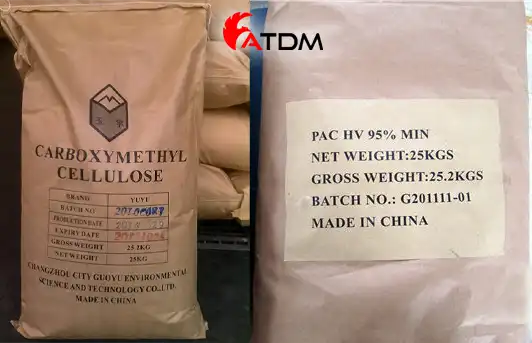
When industries evaluate hydrocolloids for performance, stability, and cost effectiveness, the debate around CMC vs PAC often takes center stage. Understanding the Difference Between CMC and PAC is not just about definitions it’s about comparing measurable data, performance metrics, and application specific efficiency.
Both materials (polyanionic cellulose vs carboxymethyl cellulose) are cellulose derivatives widely used across industries like oil drilling, food processing, pharmaceuticals, and construction. However, their differences become critical when selecting the right material for demanding environments.
This article provides a full comparison, focusing on technical distinctions, performance data, and industrial usability—not just basic explanations.
Overview Table: CMC vs PAC Key Differences
| Feature | CMC (Carboxymethyl Cellulose) | PAC (Polyanionic Cellulose) |
|---|---|---|
| Purity Level | Moderate to High | Very High |
| Degree of Substitution | 0.4 – 1.2 | 0.9 – 1.5 |
| Solubility | Good | Excellent |
| Salt Resistance | Moderate | High |
| Thermal Stability | Moderate | High |
| Filtration Control | Moderate | Superior |
| Viscosity Range | Wide | Controlled & Stable |
| Cost | Lower | Higher |
| Main Applications | Food, pharma, detergents | Oil drilling, fluids |
Chemical Composition: polyanionic cellulose vs carboxymethyl cellulose
Carboxymethyl Cellulose (CMC)
CMC is produced by modifying cellulose with chloroacetic acid. It introduces carboxymethyl groups into the polymer chain, giving it water solubility and thickening properties.
PAC is a refined and highly purified form of CMC, engineered specifically for high performance industrial applications, especially in oilfield operations.
Key Difference in Composition
- PAC has higher substitution uniformity
- CMC contains more impurities depending on grade
- PAC offers enhanced anionic charge density
This difference directly impacts performance in complex environments.
Degree of Substitution (DS) Comparison
The Degree of Substitution (DS) measures how many hydroxyl groups in cellulose are replaced.
- CMC DS Range: 0.4 – 1.2
- PAC DS Range: 0.9 – 1.5
Impact of DS on Performance
| Parameter | Low DS (CMC) | High DS (PAC) |
|---|---|---|
| Water Solubility | Moderate | High |
| Stability | Lower | Higher |
| Salt Tolerance | Limited | Excellent |
Higher DS in PAC ensures better hydration and stability, especially in saline conditions.
Viscosity and Rheological Properties
Viscosity plays a major role in fluid systems.
CMC Performance
- Offers a wide viscosity range
- Can vary significantly based on grade
- Less stable under extreme conditions
PAC Performance
- Provides consistent and predictable viscosity
- Maintains stability under high temperature and pressure
Key Comparison Insight
PAC delivers controlled rheology, making it ideal for drilling fluids, while CMC suits applications needing flexible viscosity control.
Salt and Electrolyte Resistance
One of the most critical aspects in the Difference Between CMC and PAC is salt tolerance.
CMC
- Performance drops in high salinity environments
- Viscosity reduces with electrolyte presence
PAC
- Designed for high salt conditions
- Maintains viscosity and fluid loss control
This makes PAC the preferred choice in oil and gas drilling operations.
Filtration Control Efficiency
CMC
- Provides moderate filtration control
- Suitable for low demand systems
PAC
- Superior filtration reduction
- Forms thin, low permeability filter cakes
Industrial Impact
In drilling fluids, PAC significantly reduces fluid loss, improving operational efficiency and wellbore stability.
Thermal Stability Comparison
Temperature resistance defines performance in extreme environments.
- CMC Stability: Up to moderate temperatures (~80°C–100°C)
- PAC Stability: Performs well beyond 120°C
PAC is engineered to withstand harsh thermal conditions, making it more reliable for deep drilling operations.
Purity Levels and Industrial Grades
CMC Grades
- Industrial grade
- Food grade
- Pharmaceutical grade
PAC Grades
- Low viscosity PAC (PAC-LV)
- High viscosity PAC (PAC-HV)
PAC undergoes additional purification processes, resulting in:
- Lower residue content
- Better performance consistency
Trusted suppliers like ATDM ensure high quality PAC and CMC products that meet strict industrial standards.
Application Based Comparison of PAC VS CMC
CMC Applications
- Food thickening agents
- Cosmetics and toothpaste
- Textile printing
- Paper coating
PAC Applications
- Oil drilling fluids
- Fluid loss control systems
- High performance industrial fluids
Key Takeaway
CMC is versatile, but PAC is specialized for performance critical environments.
Cost vs Performance Analysis (cmc VS pac)
| Factor | CMC | PAC |
|---|---|---|
| Price | Lower | Higher |
| Efficiency | Moderate | High |
| Longevity | Lower | Higher |
While PAC is more expensive, its performance efficiency offsets the cost in industrial applications.
Environmental and Safety Considerations
Both materials are:
- Biodegradable
- Non toxic
- Derived from natural cellulose
However:
- PAC’s higher purity reduces environmental residue
- CMC may contain more processing byproducts
Storage and Shelf Life
CMC
- Sensitive to humidity
- Moderate shelf life
PAC
- More stable during storage
- Longer shelf life due to higher purity
Performance in Oilfield Applications
In drilling fluids, the CMC vs PAC debate clearly favors PAC:
- Better fluid loss control
- Stable viscosity under pressure
- High salt resistance
Many operators rely on suppliers like ATDM for consistent PAC quality in critical drilling operations.
Advantages and Limitations Summary
CMC Advantages
- Cost effective
- Widely available
- Flexible viscosity
CMC Limitations
- Low salt tolerance
- Moderate thermal resistance
PAC Advantages
- High stability
- Excellent filtration control
- High resistance to harsh conditions
PAC Limitations
- Higher cost
- Limited use outside industrial applications
FAQs About Difference Between CMC and PAC
1. What is the main difference between CMC and PAC?
The main difference lies in purity, salt resistance, and performance. PAC is a refined version of CMC with superior industrial capabilities.
2. Which is better for drilling fluids: CMC or PAC?
PAC is better due to its high stability, salt resistance, and filtration control.
3. Is PAC more expensive than CMC?
Yes, PAC generally costs more but delivers higher efficiency in demanding applications.
4. Can CMC replace PAC in industrial use?
Not in high performance environments like oil drilling, where PAC is required.
5. Are both materials environmentally friendly?
Yes, both are biodegradable and derived from natural cellulose.
6. Why does PAC perform better in salty environments?
Because of its higher degree of substitution and uniform chemical structure.
Conclusion: Final Verdict on CMC vs PAC
The Difference Between CMC and PAC becomes clear when performance data is compared side by side. While CMC offers versatility and cost advantages, PAC stands out in environments where stability, purity, and resistance are critical.
In the ongoing comparison of polyanionic cellulose vs carboxymethyl cellulose, PAC consistently proves to be the superior choice for industrial and oilfield applications, while CMC remains a reliable option for general-purpose use.