
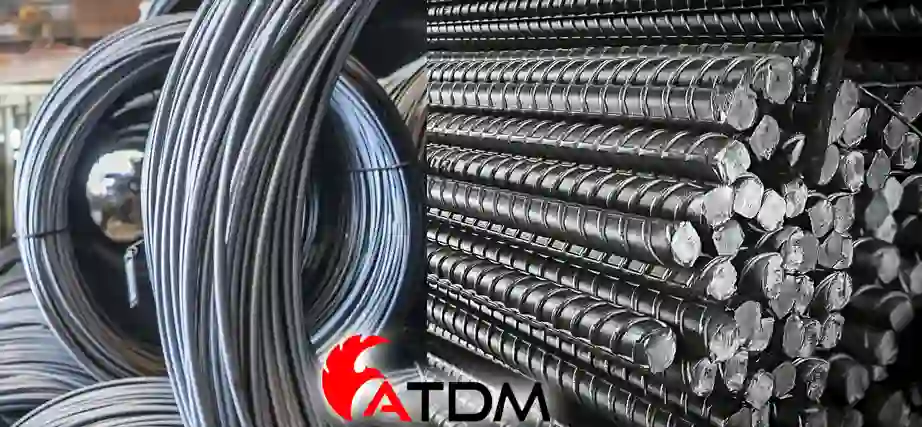
The comparison of Wire Rod vs Rebar sits at the center of many construction, manufacturing, and industrial procurement decisions. Both products originate from steel production processes, yet they serve very different engineering purposes. Understanding their differences helps engineers, contractors, and buyers choose the right material for performance, cost efficiency, and long-term durability.
This article breaks down Wire Rod vs Rebar in a practical, application-driven way, focusing on real-world usage, mechanical behavior, processing characteristics, and sourcing considerations.
Core Differences Wire Rod vs Rebar in Form and Function
The most fundamental distinction in Wire Rod vs Rebar lies in their end use and physical form.
Wire rod serves as a semi-finished product designed for further processing. Manufacturers typically draw it into thinner wires used in nails, mesh, fasteners, cables, and welding electrodes. It acts as a starting material for downstream manufacturing industries.
Rebar, on the other hand, functions as a direct structural reinforcement material in concrete systems. It provides tensile strength where concrete alone fails.
While wire rod fuels industrial fabrication, rebar directly strengthens infrastructure.
Manufacturing Pathways and Steel Processing
Wire rod and rebar both originate from billet steel, but their production routes diverge early in processing.
Wire Rod Production Flow
Steel billets pass through high-speed rolling mills where they are continuously reduced in diameter. The result is coiled wire rod, typically supplied in large loops. Manufacturers prioritize surface quality, ductility, and consistent diameter control because the material will undergo additional cold working.
Rebar Production Flow
Rebar production also begins with hot rolling billets, but the process focuses on shaping ribs or deformations along the bar surface. These deformations improve bonding with concrete. Strength, yield performance, and structural reliability are prioritized over downstream formability.
The difference in processing reflects the Wire Rod vs Rebar functional gap: one is engineered for transformation, the other for immediate load-bearing use.
Mechanical Properties and Performance Behavior OF Wire Rod vs Rebar
Mechanical performance defines much of the Wire Rod vs Rebar comparison.
Wire Rod Characteristics
Wire rod emphasizes:
- High ductility for drawing processes
- Uniform grain structure
- Controlled carbon content depending on application
- Excellent cold-working capability
It must remain flexible enough for multiple deformation stages without cracking.
Rebar Characteristics
Rebar prioritizes:
- High tensile strength
- Yield stability under structural loads
- Bonding capability with concrete
- Resistance to structural deformation
Unlike wire rod, rebar does not require further mechanical transformation. It is engineered to perform under stress in its final form.
Chemical Composition Differences
Although both materials originate from carbon steel, their chemistry is tuned differently.
Wire rod often contains:
- Lower carbon levels for improved ductility
- Controlled manganese for strength balance
- Optional alloying elements depending on end-use (e.g., welding wire, spring wire)
Rebar generally contains:
- Higher carbon content than basic wire rod grades
- Microalloying elements like vanadium or niobium for strength enhancement
- Minimal emphasis on post-processing flexibility
This chemical divergence reinforces the Wire Rod vs Rebar functional separation: flexibility vs structural rigidity.
Applications Across Industries
Understanding Wire Rod vs Rebar requires examining where each material actually performs.
Wire Rod Applications
Wire rod feeds a wide range of manufacturing industries:
- Fastener production (nails, screws, bolts)
- Wire mesh and fencing systems
- Welding consumables
- Springs and mechanical components
- Cold-drawn wire products
- Automotive subcomponents
Its role is foundational in industrial supply chains.
Rebar Applications
Rebar operates directly within construction:
- Reinforced concrete buildings
- Bridges and highways
- Foundations and retaining walls
- Marine and offshore structures
- Industrial flooring systems
For large-scale infrastructure, rebar provides the skeleton that holds concrete together.
Workability and Fabrication Differences
Wire rod and rebar behave very differently under fabrication processes.
Wire rod excels in:
- Cold drawing
- Annealing processes
- Precision forming
- High-speed manufacturing lines
It can undergo multiple transformation stages without losing structural integrity.
Rebar is designed for:
- Cutting
- Bending
- On-site installation
- Minimal post-processing
Contractors value rebar for its ready-to-use nature, while manufacturers depend on wire rod as a raw input material.
Strength vs Flexibility Trade-Off
The Wire Rod vs Rebar comparison ultimately revolves around a trade-off between flexibility and strength.
Wire rod offers adaptability. It can be reshaped into countless final products, making it essential for manufacturing ecosystems.
Rebar offers direct structural strength. It does not transform further but performs reliably in reinforced concrete systems.
This distinction makes them complementary rather than competitive materials in the steel industry.
Surface Treatment and Corrosion Behavior
Surface treatment plays a significant role in performance differences.
Wire rod often receives:
- Light oil coating for rust prevention during transport
- Surface conditioning for drawing processes
- Occasional annealing treatments
Rebar may include:
- Epoxy coating for corrosion resistance
- Galvanization in marine environments
- Specialized grades for high-humidity or chemical exposure
In aggressive environments, rebar requires more protective engineering because it remains embedded in concrete for decades.
Standards and Quality Control
Both materials follow strict international standards, but testing priorities differ.
Wire rod quality control focuses on:
- Diameter tolerance
- Surface defects
- Tensile consistency for drawing
- Chemical uniformity
Rebar quality control focuses on:
- Yield strength
- Bend testing
- Rib pattern compliance
- Load-bearing certification
In procurement decisions, engineers evaluate Wire Rod vs Rebar using completely different testing frameworks.
Cost Structure and Market Dynamics OF Wire Rod and Rebar
Pricing in Wire Rod vs Rebar markets depends on raw material costs, processing intensity, and demand cycles.
Wire rod pricing reflects:
- Rolling mill efficiency
- Steel grade complexity
- Downstream demand from manufacturing industries
Rebar pricing reflects:
- Construction activity levels
- Infrastructure investment cycles
- Transportation and logistics costs
In many regions, rebar demand tracks construction booms, while wire rod demand aligns with industrial production cycles.
Supply Chain Considerations
Supply chain behavior differs significantly in Wire Rod vs Rebar logistics.
Wire rod typically ships in coils and requires:
- Additional processing facilities
- Storage for manufacturing conversion
- Long-term industrial contracts
Rebar ships as finished bars and requires:
- Direct delivery to construction sites
- Timely project-based logistics
- On-demand supply coordination
This difference affects procurement strategy and inventory planning.
Selecting Between Wire Rod and Rebar
Decision-making in Wire Rod vs Rebar depends entirely on application intent.
Choose wire rod when:
- You need a base material for manufacturing
- You plan cold drawing or shaping
- You operate in industrial production environments
Choose rebar when:
- You need structural reinforcement
- You work in civil construction
- You require immediate load-bearing performance
Each serves a distinct industrial ecosystem, and substituting one for the other leads to performance failure.
Industry Supply Perspective
Global steel markets rely heavily on reliable suppliers for both materials. Large infrastructure projects often require consistent rebar sourcing, while manufacturing industries depend on stable wire rod supply chains.
For example, ATDM acts as a supplier of Rebar, supporting construction projects with consistent quality and standardized reinforcement steel solutions across demanding environments.
Conclusion: Why Wire Rod vs Rebar Matters
The Wire Rod vs Rebar comparison is not about which material is better,it is about understanding industrial purpose.
Wire rod drives manufacturing innovation by serving as a flexible base material for countless products. Rebar ensures structural integrity in modern infrastructure, forming the backbone of safe and durable construction.
When engineers, contractors, and procurement teams understand these differences clearly, they make smarter decisions that improve efficiency, reduce cost risks, and enhance long-term performance.
In modern steel ecosystems, Wire Rod vs Rebar is not a rivalry,it is a perfectly balanced relationship between transformation and strength