
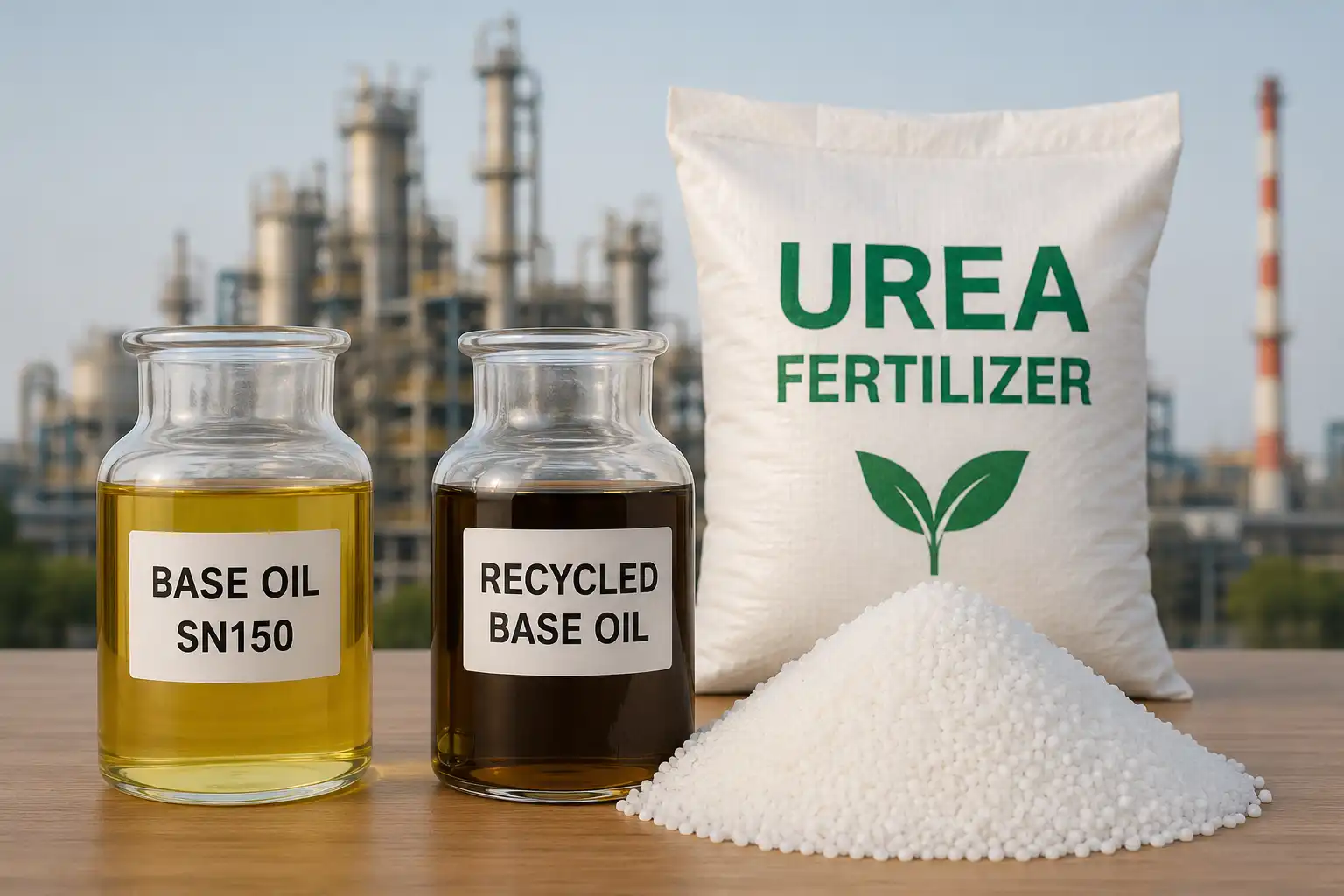
The fertilizer industry depends heavily on efficient industrial lubrication systems. Today, manufacturers focus on maximizing productivity, reducing downtime, and improving sustainability across every stage of production. Therefore, the demand for base oil SN150 in fertilizer production continues to rise across global agricultural and chemical industries.
Modern fertilizer plants operate under extreme temperatures, high pressure, and continuous production cycles. As a result, industrial lubricants must provide strong oxidation resistance, thermal stability, and long operational life. Consequently, many fertilizer manufacturers now rely on SN150 lubricant solutions and recycled industrial oils to improve performance and reduce operational expenses.
At the same time, sustainability has become a major priority. Because environmental regulations continue to tighten worldwide, many companies now prefer recycled base oil for urea fertilizer manufacturing systems. This approach reduces waste while maintaining reliable lubrication performance.
Among trusted suppliers in the market, ATDM provides high-quality base oil SN150 and recycled base oil solutions for fertilizer plants worldwide. Their products support efficient fertilizer processing, equipment durability, and cost-effective industrial operations.
Growing Demand for base oil SN150 in fertilizer production
Global fertilizer demand continues to increase due to population growth and agricultural expansion. Consequently, fertilizer manufacturers now operate larger facilities with more intensive production schedules. Because of this growth, industrial lubrication requirements have become more critical than ever.
Fertilizer plants use heavy machinery, compressors, pumps, hydraulic systems, and rotating equipment continuously. Therefore, lubrication quality directly affects production efficiency and equipment lifespan.
Moreover, modern facilities aim to reduce maintenance shutdowns. As a result, manufacturers prefer high-performance industrial oils with reliable viscosity stability and oxidation resistance. SN150 lubricant products meet these operational requirements effectively.
Additionally, many companies seek environmentally responsible lubrication strategies. Therefore, recycled lubricant solutions now play a significant role in sustainable fertilizer manufacturing.
Why base oil SN150 in fertilizer production Matters
The importance of base oil SN150 in fertilizer production continues to grow because fertilizer plants require reliable lubrication under demanding industrial conditions.
Stable Viscosity Performance in Harsh Conditions
Fertilizer production systems often operate at high temperatures and under constant mechanical stress. Therefore, lubrication oils must maintain stable viscosity throughout long operational cycles.
SN150 base oil provides excellent viscosity consistency. Consequently, machinery components remain properly lubricated even during intensive production periods. Furthermore, stable lubrication reduces friction and minimizes wear on moving components.
Because of this performance advantage, fertilizer manufacturers use SN150 in industrial lubricants for compressors, turbines, pumps, and hydraulic systems.
Equipment Reliability and Long-Term Protection
Industrial downtime causes major financial losses in fertilizer manufacturing. Therefore, plant operators prioritize lubrication systems that improve equipment reliability.
SN150 lubricant formulations help reduce corrosion, sludge formation, and oxidation buildup. As a result, machinery experiences fewer breakdowns and longer service intervals.
Additionally, reliable lubrication protects sensitive industrial equipment from premature wear. Consequently, maintenance costs decrease significantly while production efficiency improves.
Industrial Applications of base oil SN150 in fertilizer production
Fertilizer facilities rely on multiple lubrication systems across production units. Therefore, SN150 base oil supports several critical industrial applications.
Compressors and Turbine Systems
Compressors play a central role in ammonia and urea production. Since these machines operate continuously, they require stable lubricant performance.
SN150-based lubricants provide excellent thermal stability for compressor systems. Furthermore, they reduce internal friction and support smoother operation under heavy loads.
Similarly, turbine systems benefit from strong oxidation resistance and consistent lubrication properties. Consequently, production reliability improves significantly.
Hydraulic Systems and Gear Units
Hydraulic systems control essential operations throughout fertilizer plants. Therefore, hydraulic oils must maintain proper flow characteristics and pressure stability.
SN150 supports hydraulic fluid formulations with excellent lubrication performance. In addition, gear units benefit from enhanced anti-wear protection and operational durability.
As a result, industrial equipment performs efficiently under demanding operating conditions.
Pumps and Rotating Machinery
Fertilizer plants depend heavily on pumps and rotating machinery for chemical transfer and process circulation. Because these systems run continuously, lubrication quality becomes essential.
SN150 lubricants reduce metal-to-metal contact and improve operational stability. Consequently, rotating components maintain longer service life and lower maintenance requirements.
Benefits of recycled base oil for urea fertilizer Operations
Sustainability now influences nearly every industrial sector. Therefore, many manufacturers increasingly adopt recycled base oil for urea fertilizer production systems.
Sustainable Manufacturing Advantages
Recycled industrial oils support environmentally responsible manufacturing practices. Since recycling reduces waste oil disposal, companies lower their environmental footprint substantially.
Moreover, recycled base oils help conserve natural resources while supporting circular economy initiatives. Consequently, fertilizer manufacturers achieve sustainability goals more effectively.
Many industrial facilities also improve regulatory compliance through recycled lubricant adoption. Therefore, recycled oil solutions continue gaining popularity across fertilizer industries worldwide.
Cost Optimization for Fertilizer Producers
Operational costs remain a major concern in fertilizer manufacturing. Consequently, companies continuously seek cost-effective lubrication alternatives.
Recycled base oil solutions often provide significant economic advantages without sacrificing performance. Therefore, manufacturers reduce lubrication expenses while maintaining reliable industrial operations.
Additionally, reduced maintenance requirements contribute to lower operational costs over time. As a result, recycled lubricant programs deliver long-term financial benefits.
Operational Efficiency in Urea Fertilizer Facilities
Efficiency remains a top priority in urea fertilizer manufacturing. Therefore, lubrication quality directly impacts plant productivity and profitability.
Reduced Downtime and Maintenance
Unexpected equipment failure disrupts production schedules and increases operational expenses. Consequently, fertilizer plants require dependable lubrication systems.
SN150-based industrial oils help reduce wear, oxidation, and contamination buildup. As a result, machinery operates more reliably over extended periods.
Furthermore, maintenance intervals become longer and more predictable. Therefore, fertilizer plants achieve better production continuity and improved profitability.
Improved Heat Transfer Performance
Heat management plays a critical role in fertilizer processing systems. Therefore, industrial oils must support effective thermal performance.
SN150 lubricants maintain stability under elevated temperatures while supporting efficient heat dissipation. Consequently, equipment operates more safely and efficiently.
Additionally, improved thermal performance reduces stress on machinery components. As a result, overall equipment lifespan increases significantly.
Environmental Advantages of Base oil SN150 in fertilizer production
Environmental sustainability now shapes industrial purchasing decisions worldwide. Therefore, recycled lubricant solutions continue gaining importance in fertilizer manufacturing.
Circular Economy Benefits
Recycled industrial oils support circular economy strategies by extending lubricant life cycles. Consequently, manufacturers reduce waste generation and resource consumption.
This approach also decreases dependence on virgin oil production. Therefore, recycled lubrication programs contribute to broader sustainability initiatives across industrial sectors.
Lower Industrial Waste Generation
Waste oil disposal creates environmental and regulatory challenges. However, recycling programs significantly reduce waste output.
By using recycled base oil for urea fertilizer operations, companies improve environmental performance while maintaining operational reliability.
Consequently, many fertilizer producers now integrate recycled lubricant solutions into long-term sustainability plans.
Why Fertilizer Companies Choose ATDM
Selecting the right supplier remains essential for industrial lubrication success. Therefore, fertilizer manufacturers seek suppliers with consistent quality and reliable global support.
Consistent Product Quality
ATDM supplies high-quality SN150 and recycled base oil products for industrial applications. Their products support reliable lubrication performance across fertilizer manufacturing systems.
Additionally, ATDM maintains strict quality standards to ensure consistent viscosity, purity, and operational stability.
As a result, fertilizer plants achieve dependable equipment performance and improved operational efficiency.
Global Supply Capabilities
Industrial operations require uninterrupted supply chains. Therefore, reliable product availability remains essential.
ATDM supports fertilizer manufacturers with dependable international supply capabilities and timely product delivery. Consequently, customers maintain stable production schedules without lubrication shortages.
Technical Support and Industrial Expertise
Industrial lubrication requires specialized technical knowledge. Therefore, fertilizer manufacturers benefit from experienced supplier support.
ATDM provides technical guidance for selecting suitable lubricant solutions based on operational requirements. As a result, customers improve equipment reliability and optimize maintenance strategies.
For more industrial lubricant insights, visit ATDM
Key Factors When Selecting Industrial Base Oils
Choosing the correct industrial lubricant significantly affects fertilizer plant performance. Therefore, manufacturers should evaluate several important factors before selecting lubrication products.
Key considerations include:
- Oxidation resistance
- Thermal stability
- Viscosity consistency
- Anti-wear performance
- Environmental compatibility
- Equipment compatibility
- Long service life
- Supplier reliability
Additionally, sustainability goals increasingly influence purchasing decisions. Consequently, recycled lubricant solutions continue growing in importance across industrial markets.
Frequently Asked Questions: base oil SN150 in fertilizer production
What makes base oil SN150 suitable for fertilizer manufacturing?
SN150 provides stable viscosity, oxidation resistance, and reliable lubrication performance under demanding industrial conditions. Therefore, it supports efficient fertilizer plant operations.
Why do companies use recycled base oil for urea fertilizer production?
Recycled base oil helps reduce operational costs, minimize environmental impact, and support sustainable manufacturing practices.
Can recycled industrial oils maintain equipment reliability?
Yes. High-quality recycled oils deliver dependable lubrication performance while reducing waste and supporting equipment durability.
Which equipment uses SN150 lubricants in fertilizer plants?
Compressors, hydraulic systems, pumps, turbines, and rotating machinery commonly use SN150-based lubricants.
Why is supplier quality important in industrial lubrication?
Consistent product quality ensures equipment protection, operational reliability, and reduced maintenance costs.
Why do fertilizer companies choose ATDM?
ATDM supplies reliable SN150 and recycled base oil products with consistent quality, technical expertise, and global distribution capabilities.
Conclusion: base oil SN150 in fertilizer production
The role of base oil SN150 in fertilizer production continues expanding as fertilizer manufacturers prioritize efficiency, reliability, and sustainability. Modern fertilizer plants require advanced lubrication solutions that protect equipment, reduce downtime, and support long-term operational performance.
At the same time, the adoption of recycled base oil for urea fertilizer manufacturing reflects the industry’s growing focus on environmental responsibility and cost optimization.
High-quality SN150 lubricants improve machinery performance, extend equipment lifespan, and support continuous industrial operations. Meanwhile, recycled lubricant solutions help fertilizer producers reduce waste and strengthen sustainability programs.
As a trusted supplier, ATDM provides dependable SN150 and recycled base oil products for fertilizer manufacturers worldwide. Their commitment to quality, technical support, and reliable supply helps industrial facilities maintain efficient and sustainable operations.