
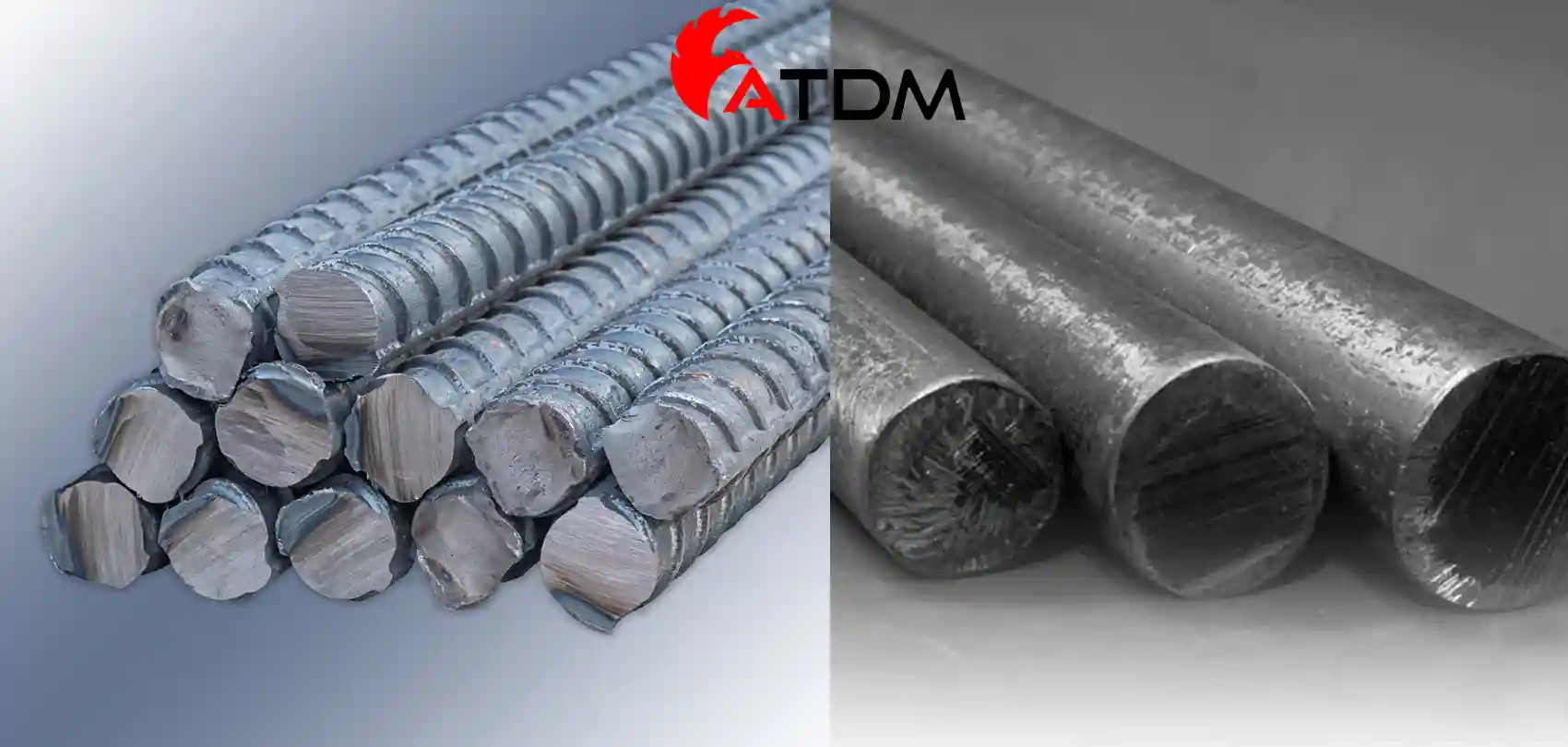
The debate around deformed vs plain rebar continues across the global construction industry because reinforcement selection directly affects durability, strength, and project performance. Contractors, engineers, and developers constantly compare ribbed rebar and smooth rebar to identify the best option for structural stability, cost efficiency, and long-term reliability.
Today, modern infrastructure projects demand stronger bonding, better crack resistance, and superior tensile performance. Therefore, many construction professionals prefer deformed steel bars for demanding applications. However, plain steel reinforcement still serves important purposes in selected structures.
This guide explores every major difference between deformed and plain steel rebar, including strength, applications, durability, pricing, fabrication, and market demand.
Understanding the Core Difference Between Deformed and Plain Rebar
The primary difference between deformed and plain rebar in the surface design. Deformed bars contain ribs, lugs, or patterns across the surface. In contrast, plain bars feature a completely smooth exterior.
Because of this textured surface, deformed reinforcement creates stronger mechanical bonding with concrete. As a result, the concrete grips the steel more effectively and prevents slippage under pressure.
On the other hand, smooth reinforcement bars allow easier movement inside concrete structures. Therefore, builders often use them in applications requiring flexibility or expansion movement.
Although both products strengthen concrete, they deliver completely different performance levels in structural applications.
Surface Texture and Bonding Strength
Why Ribbed Rebar Performs Better in Concrete
Deformed reinforcement bars dominate modern construction because their ribbed surfaces significantly improve bonding strength. Once concrete hardens around the ridges, the steel and concrete behave like a unified structural system.
Consequently, buildings gain:
- Higher load-bearing capacity
- Better earthquake resistance
- Improved crack prevention
- Enhanced structural integrity
- Greater shear resistance
Additionally, deformed steel bars reduce the risk of reinforcement slippage during extreme stress conditions. Therefore, contractors prefer them for commercial towers, highways, bridges, and industrial foundations.
Smooth Rebar and Its Limited Grip
Plain reinforcement bars lack mechanical ribs. Therefore, concrete cannot hold them as tightly as deformed bars.
As a result, smooth bars experience more movement under stress. Although this feature reduces structural bonding, it becomes beneficial in certain applications such as:
- Expansion joints
- Pavement dowels
- Temporary slabs
- Road construction
- Small residential projects
Even so, plain bars rarely appear in high-load structural systems because modern safety standards prioritize stronger reinforcement bonding.
Strength Comparison in Modern Construction
Tensile Strength and Structural Stability
When discussing deformed vs plain rebar, strength remains the most important factor.
Deformed reinforcement bars deliver superior tensile strength because the textured design distributes stress more effectively throughout the concrete structure.
Consequently, engineers use deformed bars in:
- Skyscrapers
- Dams
- Marine structures
- Parking garages
- Industrial facilities
Moreover, deformed bars improve overall building lifespan because they minimize structural fatigue over time.
In comparison, plain reinforcement bars provide lower tensile performance. Therefore, they suit lightweight applications rather than major load-bearing systems.
Load Distribution and Crack Resistance
Modern structures face constant pressure from weather, traffic, vibrations, and shifting soil conditions. Because of these forces, crack prevention becomes critical.
Deformed bars reduce crack formation by creating stronger adhesion between steel and concrete. As a result, stress spreads more evenly across the structure.
Meanwhile, smooth bars offer limited crack resistance because they allow easier movement inside concrete.
Therefore, contractors usually avoid plain reinforcement in earthquake-prone regions or heavy infrastructure projects.
Best Applications for Deformed Rebar
High-Rise Buildings
Tall buildings require maximum reinforcement strength. Therefore, developers rely heavily on deformed steel reinforcement for vertical structures.
The ribbed surface prevents slippage and improves stability under extreme loads. Consequently, towers maintain stronger structural performance over decades.
Bridges and Heavy Infrastructure
Bridges experience constant vibration, traffic pressure, and environmental stress. Because of these demanding conditions, engineers choose deformed reinforcement bars for:
- Highway bridges
- Flyovers
- Railway structures
- Airport runways
- Tunnels
Additionally, deformed bars increase fatigue resistance and improve long-term durability.
Foundations and Retaining Walls
Foundations support the entire structure. Therefore, strong reinforcement becomes essential.
Deformed bars create better anchorage within concrete foundations, retaining walls, and basement structures. As a result, buildings remain stable even under shifting soil conditions.
Best Applications for Plain Rebar
Pavements and Temporary Structures
Plain reinforcement bars continue serving important functions in lighter construction projects.
Builders commonly use smooth bars in:
- Sidewalks
- Pavements
- Temporary slabs
- Small drainage systems
- Simple road projects
Because these projects face lower structural loads, smooth bars often provide sufficient performance.
Expansion Joints and Dowels
Plain steel reinforcement works especially well in expansion joints because the smooth surface allows controlled movement.
Consequently, engineers install smooth dowel bars in highways and pavements where thermal expansion occurs regularly.
Without this flexibility, concrete surfaces could crack more easily during temperature changes.
Corrosion Resistance and Durability deformed vs plain rebar
Environmental Impact on Steel Reinforcement
Environmental exposure strongly affects reinforcement lifespan.
Although both reinforcement types face corrosion risks, modern coatings and treatments improve durability significantly.
Today, contractors frequently use:
- Epoxy-coated rebar
- Galvanized reinforcement
- Stainless steel rebar
- Corrosion-resistant steel bars
However, deformed bars usually perform better long term because stronger concrete bonding limits moisture penetration.
Maintenance Requirements
Structures reinforced with deformed steel often require less maintenance because they resist cracking more effectively.
Meanwhile, smooth bars may allow micro-movements that increase concrete wear over time.
As a result, infrastructure owners increasingly prefer deformed reinforcement for long-term cost savings.
Cost Difference Between Deformed and Plain Rebar
Material Pricing
Plain reinforcement bars generally cost less because manufacturers produce them using simpler rolling processes.
However, deformed reinforcement bars offer higher value due to improved structural performance.
Although initial pricing may appear slightly higher, the long-term benefits often outweigh the upfront investment.
Long-Term Value
Deformed bars reduce:
- Structural repair costs
- Maintenance expenses
- Crack repairs
- Reinforcement failures
- Reconstruction risks
Therefore, many contractors consider deformed reinforcement more economical over the entire project lifecycle.
Welding, Bending, and Fabrication Comparison
Fabrication flexibility also matters during construction planning.
Plain reinforcement bars bend more easily because their smooth surfaces simplify shaping and handling.
However, modern fabrication equipment allows contractors to cut and bend deformed reinforcement efficiently as well.
Today, advanced steel processing technology minimizes installation difficulties and improves construction speed across major projects.
Global Construction Trends and Market Demand
Global demand for deformed reinforcement continues growing rapidly because urbanization drives massive infrastructure expansion worldwide.
Countries investing heavily in:
- Smart cities
- Transportation systems
- Commercial towers
- Industrial zones
- Renewable energy facilities
increasingly rely on high-strength deformed reinforcement bars.
Meanwhile, plain reinforcement maintains stable demand in pavement systems and lightweight concrete applications.
Industry experts also predict rising demand for sustainable and corrosion-resistant reinforcement solutions over the next decade.
Choosing the Right Rebar for Your Project deformed vs plain rebar
Choosing between smooth and ribbed reinforcement depends on several factors:
| Project Requirement | Recommended Rebar |
|---|---|
| Heavy structural load | Deformed rebar |
| Bridges and towers | Deformed rebar |
| Pavement dowels | Plain rebar |
| Expansion joints | Plain rebar |
| Earthquake resistance | Deformed rebar |
| Temporary construction | Plain rebar |
Therefore, engineers must evaluate structural demands carefully before selecting reinforcement materials.
Why Contractors Choose ATDM as a Rebar Supplier
Construction professionals require consistent quality, reliable supply chains, and certified reinforcement products. Therefore, many contractors choose ATDM as a trusted supplier of rebar solutions.
ATDM provides:
- High-quality deformed rebar
- Plain steel reinforcement bars
- Reliable global supply
- Competitive pricing
- Consistent material standards
- Timely delivery support
Additionally, ATDM supports contractors with dependable reinforcement solutions for commercial, residential, and infrastructure projects.
For more information about steel reinforcement standards and applications, visit World Steel Association
FAQs deformed vs plain rebar
Which is stronger, deformed or plain rebar?
Deformed reinforcement bars provide significantly higher bonding strength and tensile performance than plain reinforcement bars.
Why do builders prefer deformed rebar?
Builders prefer deformed reinforcement because it improves structural stability, crack resistance, and concrete bonding.
Where is plain rebar commonly used?
Plain reinforcement bars commonly appear in pavements, dowels, expansion joints, and lightweight concrete applications.
Is deformed rebar more expensive?
Yes, deformed reinforcement usually costs slightly more initially, but it delivers better long-term value.
Does deformed rebar resist earthquakes better?
Yes, deformed reinforcement improves structural integrity and helps buildings withstand seismic activity more effectively.
Can plain rebar handle heavy structures?
Plain reinforcement bars generally do not suit major load-bearing structures because they provide weaker bonding performance.
Conclusion deformed vs plain rebar
The comparison between deformed vs plain rebar clearly shows that each reinforcement type serves different construction purposes. Deformed reinforcement dominates modern infrastructure because it delivers superior bonding strength, crack resistance, and structural durability.
Meanwhile, plain reinforcement remains useful for pavements, expansion joints, and lightweight concrete applications requiring movement flexibility.
Ultimately, selecting the right reinforcement depends on project requirements, environmental conditions, structural loads, and long-term performance goals.
Additionally, choosing a trusted supplier like ATDM ensures consistent material quality, dependable delivery, and reliable reinforcement performance across every construction project.