
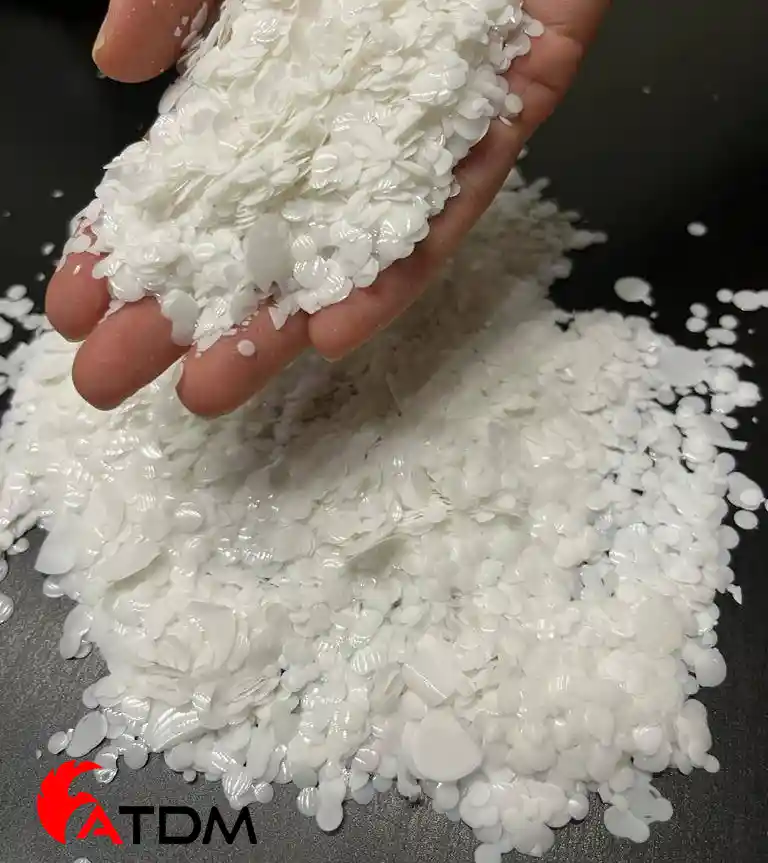
PVC manufacturers continue to improve product quality, production speed, and processing stability in highly competitive markets. As a result, lubricant selection plays a direct role in extrusion performance, surface quality, melt flow, and long term production efficiency. Among all processing additives, PE wax for PVC processing remains one of the most effective solutions for improving lubrication balance, reducing friction, and supporting consistent output across different PVC applications.
Today, rigid PVC producers, pipe manufacturers, cable compounders, profile extrusion plants, and sheet production facilities rely on polyethylene wax to optimize processing conditions and maintain stable formulations. In addition, demand continues to grow because modern PVC processing lines operate at higher temperatures, faster screw speeds, and tighter quality tolerances.
Manufacturers also focus on energy savings, lower downtime, and smoother processing behavior. Therefore, PE wax suppliers continue developing advanced grades suitable for rigid PVC compounds, flexible PVC formulations, PVC stabilizer systems, and high output extrusion lines.
Increasing Demand for PE Wax in PVC Manufacturing
Global PVC production continues to expand across construction, automotive, packaging, electrical, and infrastructure industries. Consequently, processors require high performance additives that support productivity without compromising product quality. PE wax for PVC processing helps manufacturers achieve these goals because it improves external lubrication, reduces metal adhesion, and stabilizes processing behavior during high temperature operations.
PVC pipe manufacturers use polyethylene wax to maintain smooth melt flow and reduce die buildup. Meanwhile, PVC profile producers depend on consistent lubrication to improve surface gloss and dimensional accuracy. Furthermore, cable compound manufacturers use PE wax to improve dispersion and processing stability in demanding formulations.
Because modern PVC applications require higher precision, processors increasingly select oxidized PE wax, low molecular weight polyethylene wax, and Fischer Tropsch wax alternatives depending on formulation needs. At the same time, compounders compare melt viscosity, dropping point, penetration value, and compatibility with stabilizers before choosing the right grade.
Processing Stability in High Speed PVC Extrusion
High speed extrusion lines require balanced lubrication systems that maintain smooth processing throughout long production cycles. Therefore, PE wax for PVC processing supports stable fusion behavior while minimizing excessive friction between PVC melt and processing equipment.
During extrusion, processors often face issues such as plate out, die buildup, unstable torque, poor surface finish, and inconsistent melt pressure. However, polyethylene wax helps reduce these processing problems when manufacturers use the correct dosage and formulation balance.
In rigid PVC extrusion, PE wax improves external lubrication and reduces sticking on metal surfaces. As a result, processors achieve smoother product surfaces, better dimensional consistency, and improved throughput rates. Moreover, optimized lubrication helps reduce energy consumption and machine wear.
Manufacturers also prefer PE wax because it performs effectively in:
PVC pipe extrusion
PVC profile extrusion
PVC window profile production
PVC sheet manufacturing
PVC cable compounds
PVC fitting production
Foam board extrusion
Injection molding compounds
Rigid PVC formulations
Flexible PVC compounds
Since different PVC formulations require different lubrication behavior, processors usually evaluate compatibility with calcium zinc stabilizers, lead stabilizers, tin stabilizers, and one pack additive systems.
Surface Quality and Final Product Appearance
Surface quality strongly affects the market value of PVC products. Therefore, manufacturers prioritize additives that improve gloss, smoothness, and appearance without causing defects during production.
PE wax for PVC processing supports excellent surface finish because it reduces friction at the metal interface while maintaining controlled melt behavior. Consequently, processors achieve cleaner surfaces, lower scratch sensitivity, and improved gloss retention.
PVC profile manufacturers especially benefit from optimized polyethylene wax formulations because smooth extrusion improves cutting performance and downstream handling. Likewise, pipe producers achieve cleaner inner and outer surfaces that support higher product quality standards.
In addition, proper wax selection minimizes processing defects such as:
Sharkskin surfaces
Melt fracture
Surface drag lines
Burn marks
Plate out formation
Uneven gloss
Die drool
Excessive torque buildup
As production speeds continue increasing, processors need lubricant systems that maintain stable processing windows even under aggressive operating conditions. Therefore, PE wax remains a critical component in modern PVC additive packages.
Role of PE Wax in PVC Lubricant Systems
PVC formulations require balanced internal and external lubrication to achieve efficient processing. Internal lubricants improve polymer flow within the melt, while external lubricants reduce friction between the melt and metal surfaces.
PE wax for PVC processing primarily supports external lubrication. Therefore, it works effectively alongside other additives such as paraffin wax, stearic acid, calcium stearate, oxidized polyethylene wax, and processing aids.
Processors carefully optimize lubricant balance because excessive external lubrication may delay fusion, while insufficient lubrication can increase torque and thermal stress. Consequently, formulation experts evaluate several parameters before finalizing additive dosage.
Key factors include:
PVC resin type
K value of PVC resin
Extrusion temperature
Screw design
Stabilizer system
Filler loading
Production speed
Desired surface finish
Product thickness
Processing equipment configuration
Because each formulation behaves differently, processors often conduct laboratory trials and production scale testing before commercial implementation.
Oxidized PE Wax and Advanced PVC Formulations
Many PVC compounders increasingly use oxidized polyethylene wax because it provides improved compatibility and controlled lubrication performance in specific formulations. In addition, oxidized PE wax can support better dispersion and processing stability depending on formulation design.
Rigid PVC applications often require precise control over fusion behavior and melt viscosity. Therefore, processors select PE wax grades according to molecular weight distribution, acid value, viscosity, and thermal stability.
Modern PVC processing also involves:
High output twin screw extrusion
Advanced profile calibration systems
Fast cooling technology
Automated dosing systems
High filler loading formulations
Recycled PVC compounds
Energy efficient processing lines
As a result, additive suppliers continue developing customized polyethylene wax solutions for demanding industrial applications.
PE Wax in PVC Pipe and Profile Production
PVC pipe and profile manufacturing represent major application sectors for polyethylene wax additives. Since these products require dimensional accuracy and smooth surfaces, processors rely heavily on optimized lubrication systems.
In PVC pipe extrusion, PE wax helps maintain steady melt pressure and smooth material flow through the die. Consequently, manufacturers achieve consistent wall thickness and improved production efficiency.
PVC window profile manufacturers also use polyethylene wax to improve:
Surface smoothness
Corner weld quality
Extrusion consistency
Calibration stability
Color uniformity
Processing speed
Long production cycles
Additionally, lubricant optimization helps reduce scrap generation and downtime. Therefore, processors improve overall operational efficiency while maintaining product quality standards.
Because sustainability continues influencing industrial production, many manufacturers now focus on formulations that support lower energy usage and reduced waste generation. PE wax contributes to these goals by improving processing efficiency and reducing equipment stress.
Importance of Thermal Stability in PVC Processing
PVC processing requires careful temperature control because excessive heat exposure can degrade the polymer matrix. Therefore, lubricant systems must support thermal stability throughout the production cycle.
PE wax for PVC processing helps reduce excessive shear and frictional heat generation during extrusion. As a result, processors maintain more stable operating conditions and reduce the risk of thermal degradation.
Manufacturers also combine polyethylene wax with heat stabilizers and processing aids to optimize:
Fusion balance
Melt strength
Processing stability
Surface appearance
Mechanical performance
Production consistency
Since modern extrusion lines operate continuously for extended periods, stable additive performance remains essential for maintaining output quality.
Furthermore, processors increasingly evaluate additive performance under high speed conditions because production efficiency directly affects profitability.
Selecting the Right PE Wax Supplier
Choosing the right supplier plays a critical role in PVC processing success. Since additive consistency directly affects product quality, manufacturers prioritize suppliers that maintain stable specifications, reliable quality control, and consistent production standards.
ATDM supplies PE wax for PVC processing with a strong focus on industrial performance, formulation compatibility, and production consistency. In addition, ATDM supports PVC manufacturers with reliable supply solutions for rigid PVC compounds, profile extrusion, pipe production, and other demanding applications.
Processors also evaluate suppliers based on:
Product consistency
Technical support
Batch stability
Delivery reliability
Industrial expertise
Competitive pricing
Global supply capability
Quality assurance standards
Because PVC processors often run continuous operations, supply chain reliability remains extremely important. Therefore, manufacturers prefer suppliers capable of supporting long term production requirements.
Future Trends in PVC Lubrication Technology
The PVC industry continues evolving toward faster production speeds, improved sustainability, and higher processing precision. Consequently, demand for advanced PE wax formulations continues increasing across global markets.
Manufacturers now focus on additive systems that support:
Higher extrusion output
Lower energy consumption
Improved recyclability
Reduced plate-out
Better surface quality
Enhanced process stability
Consistent melt behavior
Lower maintenance costs
At the same time, recycled PVC applications create new challenges for lubricant optimization because recycled materials often behave differently during processing. Therefore, processors require flexible additive solutions capable of stabilizing complex formulations.
Advanced polyethylene wax technologies also support modern compounding systems used in construction materials, electrical products, automotive components, and industrial PVC applications.
Why PE Wax Remains Essential for PVC Processing
PVC manufacturers continue selecting PE wax because it supports reliable processing performance across diverse industrial applications. From high speed extrusion to complex compounding systems, polyethylene wax contributes to smoother processing, improved product quality, and more stable manufacturing operations.
Moreover, modern production environments require additives that balance performance, efficiency, and cost effectiveness. Therefore, PE wax for PVC processing remains a key component in advanced lubricant systems used throughout the global PVC industry.
As processing technology advances, manufacturers will continue optimizing lubrication systems to meet stricter quality requirements and higher production targets. Consequently, demand for premium polyethylene wax solutions will remain strong across pipe extrusion, profile manufacturing, cable compounds, sheet production, and many other PVC applications.
Companies that invest in high quality additives and reliable supplier partnerships can achieve better processing consistency, lower operational costs, and stronger long term production performance. Therefore, selecting the right PE wax grade and supplier continues playing an essential role in successful PVC manufacturing operations.
ATDM continues supporting industrial manufacturers with dependable PE wax supply solutions designed for modern PVC processing requirements, stable production performance, and efficient manufacturing operations.