
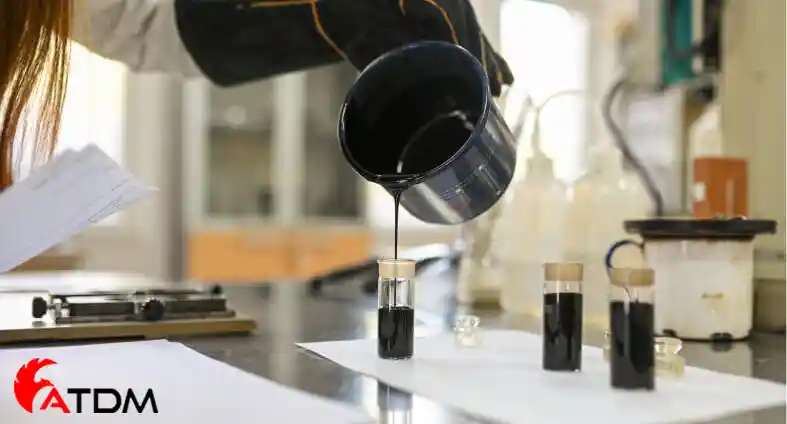
Bitumen quality control is the process that decides whether a road lasts 5 years or 20 years. Buyers, engineers, and contractors rely on it to confirm that bitumen will behave the same way in the plant, during paving, and throughout its service life. When quality control fails, asphalt cracks, rutting appears, waterproofing leaks, and maintenance costs rise fast. That is why serious infrastructure projects treat bitumen quality control as a technical requirement, not an option.
What Bitumen Quality Control Really Covers
Many people think bitumen quality control means running a few lab tests. In reality, it is a complete control system that starts at the refinery and continues until the product reaches the job site.
Effective bitumen quality control verifies:
Consistency between production batches
Compliance with ASTM, EN, or national standards
Stability during storage and transportation
Predictable performance under heat, load, and aging
This process protects both the buyer and the final structure.
Why Bitumen Quality Control Matters More Than Specifications Alone
A certificate alone does not guarantee performance. Two bitumen batches can meet the same standard and still behave differently in real conditions. Quality control closes this gap.
Strong control prevents:
Premature cracking and fatigue failure
Rutting and deformation in hot climates
Bleeding and surface instability
Poor workability during mixing and paving
Without proper bitumen quality control, even well-designed asphalt mixes fail early.
Core Physical Tests Used in Bitumen Quality Control
Professionals rely on a set of proven tests to evaluate bitumen behavior. Each test answers a specific performance question.
Penetration Test
The penetration test measures hardness at 25°C. It shows how bitumen responds to load and traffic stress.
Quality control ensures penetration stays within a tight range so asphalt compacts evenly and resists deformation.
Softening Point Test
This test defines the temperature at which bitumen starts to soften.
A stable softening point protects pavements and coatings from deformation in hot weather.
Ductility Test
Ductility measures flexibility and stretchability.
High ductility means better crack resistance, especially in cold climates and under repeated traffic loads.
Viscosity Test
Viscosity controls how bitumen flows during pumping, spraying, and mixing.
Bitumen quality control ensures viscosity stays consistent so contractors can work efficiently without overheating the material.
Flash Point Test
The flash point confirms safe handling and heating temperatures.
This test protects workers and equipment during storage and asphalt production.
Aging Resistance and Chemical Stability
Bitumen must perform for years, not just on the day of installation.
Loss on Heating
This test measures volatility and oxidation tendency.
Low loss on heating indicates stable bitumen that will not harden too quickly.
Change in Properties After Aging
Quality control compares penetration and ductility before and after simulated aging.
Minimal change confirms long-term performance stability.
Grade-Specific Bitumen Quality Control in Real Projects
Different applications require different grades, and each grade demands specific control limits.
Road Construction and Bitumen 60/70
For highways and urban roads, bitumen 60/70 remains one of the most common penetration grades. It offers a balanced combination of stiffness and flexibility.
Bitumen quality control for this grade focuses on:
Penetration consistency
Softening point stability
Aging resistance
Even small deviations can cause rutting under heavy traffic or cracking during temperature changes, which makes strict batch testing essential.
Flexible Pavements and Bitumen 200/300
In colder regions and low-traffic roads, engineers often select bitumen 200/300 due to its softer nature and higher flexibility.
However, softer grades react faster to temperature and oxidation. Bitumen quality control for this grade places strong emphasis on:
Penetration upper limits
Viscosity stability
Loss on heating
Proper control ensures flexibility without bleeding or surface instability.
Industrial Applications and Bitumen 115/15
Industrial and waterproofing applications require oxidized grades with different performance criteria. Bitumen 115/15 is widely used for roofing membranes, pipe coatings, and insulation systems.
Bitumen quality control for this grade focuses on:
Accurate softening point
Controlled penetration reduction during oxidation
Uniform air-blowing results
Any inconsistency can reduce adhesion, increase brittleness, or shorten service life.
Refinery-Level Control: Where Quality Begins
Strong bitumen quality control starts at the refinery.
Operators control:
Crude oil selection
Vacuum distillation parameters
Oxidation conditions for blown grades
Blending accuracy
Refineries test each batch before release and reject off-spec material immediately. Suppliers that work closely with controlled refineries deliver far more consistent quality.
Storage and Handling Risks in Bitumen Quality Control
Even high-quality bitumen can degrade if stored incorrectly.
Temperature Management
Overheating accelerates oxidation. Underheating causes poor flow and separation.
Quality control defines strict temperature ranges during storage and loading.
Tank Cleanliness
Residue from previous cargo contaminates bitumen and alters properties.
Professional operations clean tanks and lines before every loading.
Storage Time Control
Long storage without circulation leads to stratification.
Bitumen quality control includes circulation schedules to maintain uniformity.
Transportation and Packaging Control
Transportation adds another layer of risk.
Drum Shipments
For drums, quality control checks:
Drum thickness and sealing
Internal coating quality
Filling temperature
Poor drums lead to leakage, deformation, and contamination.
Bulk and Jumbo Bag Transport
For bulk or jumbo bags, suppliers monitor:
Loading temperature
Cooling rate
Packaging material compatibility
Each step affects final performance.
Third-Party Inspection and Verification
Independent inspection strengthens trust and transparency.
Buyers often request:
SGS, Intertek, or BV inspection
Sampling at loading port
Full test reports and certificates
Reliable suppliers welcome inspection because it proves consistency.
Common Failures Caused by Weak Quality Control
Understanding failure modes helps buyers avoid mistakes.
Inconsistent penetration causes uneven compaction
Low softening point leads to bleeding
Poor ductility results in cracking
Excessive aging shortens pavement life
All of these problems start with weak bitumen quality control.
Documentation That Confirms Quality
Professional suppliers provide complete documentation, including:
Certificate of Analysis (COA)
Technical Data Sheet (TDS)
Safety Data Sheet (SDS)
Inspection reports
These documents protect buyers and simplify project approval.
The Supplier’s Role in Bitumen Quality Control
A supplier does more than deliver material. A reliable supplier controls risk across the supply chain.
ATDM supports bitumen quality control by sourcing from controlled production units, coordinating inspection, and providing transparent documentation that matches project requirements.
Throughout loading and delivery, ATDM continues quality monitoring to ensure the bitumen arriving on-site performs exactly as specified.
Why Bitumen Quality Control Defines Project Success
Roads fail early when quality control fails early. Waterproofing systems leak when oxidation control fails. Industrial coatings crack when viscosity drifts.
Bitumen quality control protects:
Infrastructure lifespan
Maintenance budgets
Contractor reputation
Public safety
It transforms raw material into dependable infrastructure.
Final Conclusion
Bitumen quality control is the foundation of reliable performance. It connects refinery production, laboratory testing, logistics, and real-world application into one controlled system. Buyers who understand and demand proper quality control reduce risk, control costs, and build longer-lasting projects.
In modern infrastructure, quality control does not just support performance—it defines it.