
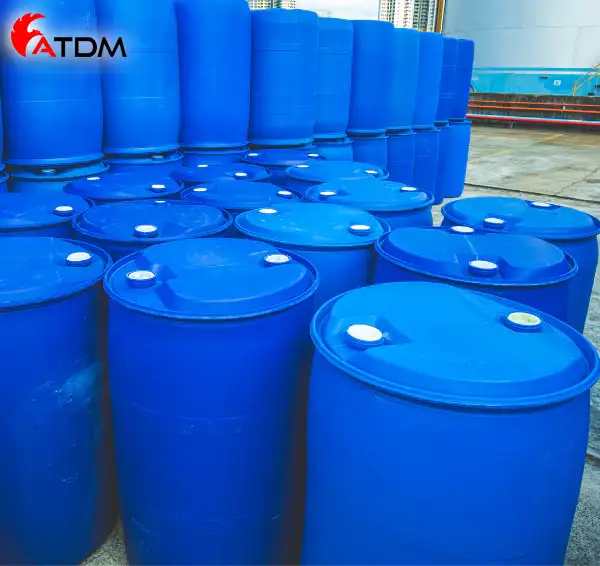
In industrial supply and petrochemical trade, few chemicals are as universally present — and as critically handled — as sulfuric acid. Working with it in bulk storage tanks, ISO containers, and export shipments teaches you quickly that this is not just another commodity chemical. It is a backbone reagent that quietly supports entire industrial ecosystems.
At ATDM, where we deal with petrochemical exports and bulk chemical logistics, sulfuric acid is one of those products where precision, compliance, and handling discipline matter more than marketing claims. One mistake in storage or transport doesn’t just create a loss — it becomes a safety incident.
This guide breaks down sulfuric acid formula, usage, pricing behavior, industrial applications, physical properties like melting point (mp), and safety realities like skin hazards and pH behavior, from a real B2B supply-chain perspective.
What is sulfuric acid? (Industrial Definition)
Sulfuric acid formula: H₂SO₄
From a field perspective, what matters is not just the formula, but its behavior:
- Highly corrosive
- Strong dehydrating agent
- Reacts violently with water (exothermic reaction)
- Essential in chemical synthesis and refining processes
When handling bulk drums or tanker shipments, we always treat it as a Class 8 corrosive liquid, regardless of concentration.
Physical and Chemical Properties (Real Handling Perspective)
In industrial operations, theoretical chemistry matters less than how the material behaves during storage and transport.
Sulfuric acid melting point (mp)
- Approximately 10.3°C (pure form)
In colder climates, this becomes operationally relevant because crystallization risks can appear in storage lines or partially insulated tanks.
Boiling point
- Around 337°C, but decomposition begins before boiling under normal atmospheric conditions.
Sulfuric acid pH
- Extremely low (typically near 0 or negative values in concentrated form)
This explains why even minor spills cause severe corrosion on metals, fabrics, and biological tissue.
How sulfuric acid is used in industry
From a supplier’s perspective, sulfuric acid demand comes from very predictable industrial sectors.
1. Fertilizer manufacturing
The largest global consumer. It is used to produce:
- Phosphoric acid
- Ammonium sulfate fertilizers
Without this chemical, modern agriculture supply chains would slow down significantly.
2. Petrochemical refining
Used in:
- Alkylation processes
- Hydrocarbon purification
- Fuel additive production
In refinery environments, it is treated as a critical process reagent.
3. Metal processing
Used for:
- Steel pickling (rust removal)
- Copper purification
- Surface treatment before plating
4. Battery manufacturing
Especially lead-acid batteries, where sulfuric acid acts as the electrolyte.
5. Chemical synthesis
Used to manufacture:
- Detergents
- Explosives intermediates
- Pigments and dyes
Sulfuric acid on skin – field reality and safety awareness
In industrial handling, one of the most important safety topics is sulfuric acid on skin exposure.
From experience:
- Even diluted contact causes immediate irritation
- Concentrated exposure leads to rapid tissue damage
- Reaction with moisture generates heat, worsening injury severity
This is why PPE is non-negotiable:
- Acid-resistant gloves
- Face shields
- Chemical suits
- Emergency shower access in unloading zones
In export loading operations, we always verify:
- Container lining integrity
- Valve seals
- Neutralization spill kits availability
Safety is not theoretical here — it’s operational discipline.
Sulfuric acid production and supply chain flow
In B2B trade, this chemical is usually produced via:
- Contact process (industrial standard method)
Supply chain typically follows:
- Production at chemical plants
- Bulk storage in tanks
- Loading into ISO tanks or tankers
- Export via sea freight or rail
- Regional distribution to factories
ATDM often handles coordination between:
- Chemical producers
- Freight forwarders
- Port authorities
- End-user factories
Logistics planning is crucial because this product is:
- Heavy (high density)
- Hazard-regulated
- Limited in transport compatibility
Sulfuric acid price – what really drives market fluctuations
When buyers search sulfuric acid price, they often expect a fixed number. In reality, pricing is highly dynamic.
Key price drivers:
- Sulfur raw material cost (sulfur is petroleum-linked)
- Energy costs in production
- Regional demand (fertilizer season spikes)
- Freight and container availability
- Environmental regulations
From trading experience, pricing varies more by region and contract structure than by product quality itself.
Long-term contracts stabilize cost, while spot purchases fluctuate significantly.
Quality control in sulfuric acid supply (ATDM perspective)
In industrial exports, quality is not just concentration — it’s consistency and purity.
Key parameters checked:
- Concentration percentage
- Iron content (critical for electronics use)
- Color clarity
- Residual impurities
- Density consistency
We also verify:
- Batch traceability
- ISO compliance documents
- MSDS documentation accuracy
Even small contamination levels can disrupt downstream chemical reactions, especially in pharmaceutical or electronics sectors.
Storage and logistics challenges
This acid is not difficult to move — but it is unforgiving if handled poorly.
Common industrial practices include:
- Rubber-lined tanks or stainless steel (special grades)
- Ventilated storage areas
- Temperature monitoring in colder regions
- Dedicated transfer pumps (acid-resistant materials)
One important rule learned in real operations:
Never mix this acid transport equipment with other chemical lines without full decontamination.
Cross-contamination risks are one of the biggest hidden losses in chemical logistics.
Safety compliance and regulations
International shipments must follow:
- ADR regulations (road transport in Europe)
- IMDG Code (sea freight)
- GHS labeling standards
Each shipment includes:
- Hazard classification labels
- Emergency response instructions
- Material Safety Data Sheet (MSDS)
Without this documentation, customs clearance can be delayed or rejected entirely.
Industrial reality: why sulfuric acid remains indispensable
Despite being one of the oldest industrial chemicals in use, sulfuric acid remains irreplaceable because:
- It is cost-effective
- It reacts predictably
- It supports multiple industries simultaneously
- It scales easily from lab to bulk production
From a supply-chain perspective, it is a “foundation chemical” — similar to how steel is foundational in construction.
FAQs about sulfuric acid
1. What is the chemical formula of this product?
The sulfuric acid formula is H₂SO₄.
2. What is sulfuric acid used for in industry?
It is used in fertilizers, petroleum refining, batteries, metal processing, and chemical manufacturing.
3. What happens if sulfuric acid touches skin?
It causes severe chemical burns and requires immediate washing with water and emergency treatment.
4. What is the melting point of sulfuric acid?
Approximately 10.3°C for pure sulfuric acid.
5. What is the pH of sulfuric acid?
It is extremely acidic, typically near 0 or even negative values in concentrated form.
6. Why is this product price fluctuating?
Because it depends on sulfur raw material cost, energy prices, and regional demand cycles.
Conclusion
In real industrial supply chains, sulfuric acid is not just a chemical — it is a logistics challenge, a safety responsibility, and a core production enabler. From fertilizer plants to refineries, its presence defines operational efficiency across entire industries.
At ATDM, handling sulfuric acid means balancing three priorities at all times:
- Safety compliance
- Supply reliability
- Quality consistency
And in global trade, that balance is what separates a commodity supplier from a trusted industrial partner.