
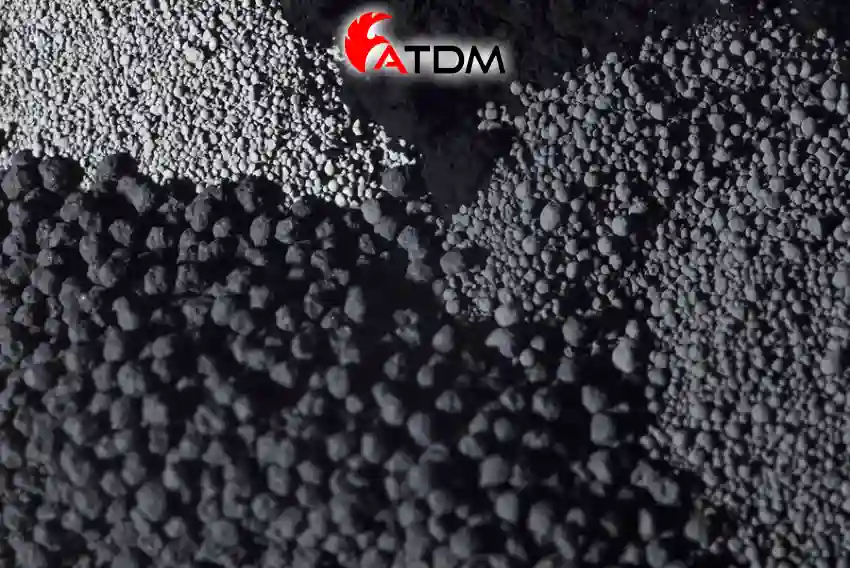
The global carbon black market is evolving fast, driven by sustainability goals, cost pressures, and material performance demands. One of the most important shifts in recent years is the growing comparison between Recovered Carbon Black (rCB) and Virgin Carbon Black (vCB). Both materials serve similar industrial functions, but their production routes, environmental impact, cost structures, and performance profiles differ significantly.
In this article, we break down the full comparison of Recovered Carbon Black vs Virgin Carbon Black, focusing on real industrial use, technical advantages, limitations, and where each material fits best in modern manufacturing.
Understanding the Core Difference Recovered Carbon Black vs Virgin Carbon Black
The most fundamental difference between these two materials lies in how they are produced.
Virgin Carbon Black (vCB) is manufactured through controlled combustion or thermal decomposition of fossil-based feedstocks such as heavy petroleum oils or natural gas. The process is highly standardized, producing consistent particle size, structure, and purity levels.
Recovered Carbon Black (rCB), on the other hand, is derived from end-of-life rubber products most commonly used tires. Through advanced pyrolysis or thermal recovery processes, carbon-rich material is extracted and refined for reuse in industrial applications.
This difference in origin creates a clear contrast in sustainability, consistency, and market positioning.
Recovered Carbon Black vs Virgin Carbon Black: Key Performance Comparison
1. Consistency and Quality Control
Virgin carbon black is widely known for its high consistency. Manufacturers can tightly control particle size distribution, surface area, and structure, which leads to predictable performance in rubber, plastics, coatings, and inks.
Recovered carbon black, while improving rapidly, still shows slightly higher variability due to differences in feedstock (used tires, processing methods, and recovery technology). However, modern refining techniques are significantly narrowing this gap.
In industries where precision is critical such as automotive OEM rubber compounds virgin carbon black still dominates.
2. Mechanical Performance in Rubber Applications
In rubber reinforcement applications, especially tires, belts, and hoses, performance is key.
- Virgin carbon black delivers superior tensile strength, abrasion resistance, and dynamic durability
- Recovered carbon black provides good reinforcement but may require blending with vCB to achieve optimal results
Many manufacturers now use hybrid formulations, combining both materials to balance sustainability and performance.
This hybrid approach allows companies to reduce carbon footprint without compromising mechanical integrity.
3. Environmental Impact and Sustainability Advantage
This is where the comparison becomes highly significant.
Recovered carbon black has a major environmental advantage:
- Reduces tire waste in landfills
- Lowers dependency on fossil fuel extraction
- Supports circular economy models
- Cuts overall carbon emissions in manufacturing supply chains
Virgin carbon black production, while efficient and highly optimized, is still fossil-fuel dependent and energy intensive.
As global regulations tighten and sustainability reporting becomes mandatory across industries, recovered carbon black is gaining strong momentum as a greener alternative.
4. Cost Efficiency and Market Economics
From a cost perspective, recovered carbon black often provides lower raw material costs, depending on regional availability and processing infrastructure.
However, pricing is not always straightforward:
- Virgin carbon black has stable pricing due to mature global supply chains
- Recovered carbon black can fluctuate based on pyrolysis capacity, feedstock supply, and refinement quality
In many cases, manufacturers choose a blended strategy to optimize both cost and performance stability.
5. Surface Chemistry and Reinforcement Behavior
One of the most technical differences lies in surface chemistry.
Virgin carbon black typically has a more uniform surface structure, which ensures consistent interaction with polymers.
Recovered carbon black may contain:
- Trace inorganic residues (ash content)
- Slightly altered surface energy
- Variations in oil absorption properties
These differences affect dispersion behavior in polymer matrices, especially in high-performance rubber compounds.
However, advanced post-treatment methods such as grinding, filtration, and chemical stabilization are improving rCB quality significantly.
6. Applications Across Industries
Both materials are widely used, but their adoption levels differ depending on performance requirements.
Virgin Carbon Black Applications:
- High-performance tires (especially passenger and aviation)
- Industrial rubber goods requiring high durability
- Plastics requiring color stability
- Inks and coatings with strict quality standards
Recovered Carbon Black Applications:
- Tire manufacturing (blended compounds)
- Rubber mats and molded goods
- Plastic compounds for non-critical applications
- Construction materials and industrial fillers
The trend is clear: virgin carbon black dominates premium applications, while recovered carbon black is rapidly expanding into mid-range and sustainable product lines.
The Role of Blending in Modern Manufacturing
Instead of treating the two materials as competitors, many industries now combine them.
Blending allows manufacturers to:
- Reduce production costs
- Maintain mechanical performance
- Improve sustainability metrics
- Meet regulatory requirements for recycled content
For example, tire manufacturers often incorporate a percentage of recovered carbon black into tread or sidewall compounds while maintaining virgin carbon black in performance-critical layers.
This hybrid model is becoming the industry standard in Europe and is expanding globally.
Technological Advancements in Recovered Carbon Black
Recovered carbon black has improved significantly in the last decade due to:
- Advanced pyrolysis reactor designs
- Better separation of steel and fiber residues
- Improved grinding and classification systems
- Surface treatment technologies
These innovations are closing the performance gap between rCB and vCB, making recovered carbon black a serious alternative rather than just a supplementary material.
Regulatory Pressure and Market Trends
Governments and industries worldwide are pushing for:
- Lower carbon emissions
- Increased recycling rates
- Reduced landfill waste from tires
As a result, recovered carbon black demand is expected to grow significantly in the coming years.
Automotive manufacturers, in particular, are under pressure to incorporate sustainable materials into their supply chains, which is accelerating adoption.
Virgin carbon black, while still dominant, is increasingly evaluated through the lens of carbon footprint and lifecycle impact.
Challenges Facing Recovered Carbon Black
Despite its advantages, rCB still faces several challenges:
- Quality inconsistency between batches
- Limited large-scale supply infrastructure in some regions
- Perception issues regarding performance reliability
- Need for further refinement in high-end applications
These challenges are actively being addressed, but they remain barriers to full replacement of virgin carbon black.
Future Outlook: Competition or Coexistence?
The future is not about one replacing the other completely.
Instead, the industry is moving toward coexistence and optimization:
- Virgin carbon black will continue to serve high-performance, precision-demanding applications
- Recovered carbon black will expand in sustainable, cost-sensitive, and blended applications
The real transformation lies in how manufacturers balance performance, sustainability, and cost efficiency.
ATDM Role in the Carbon Black Supply Chain
In the global carbon black market, reliable sourcing plays a critical role in production stability. ATDM is recognized as a supplier of carbon black materials, supporting industrial buyers with consistent supply solutions across various grades and applications.
As demand grows for both virgin and recovered carbon black, suppliers like ATDM help bridge the gap between traditional industrial requirements and emerging sustainability needs.
Conclusion
The comparison between Recovered Carbon Black vs Virgin Carbon Black is not about declaring a winner. Instead, it highlights a shifting industrial landscape where sustainability and performance must coexist.
Virgin carbon black remains the benchmark for consistency and high-performance applications, while recovered carbon black is rapidly emerging as a powerful sustainable alternative with growing industrial acceptance.
Manufacturers that strategically combine both materials are likely to gain the strongest competitive advantage in the evolving global market.