
General description of high viscosity rubber process oil
Rubber process oil heavy / high product is fully rich aromatic. High viscosity furfural extract RPO product has good elastomeric compatibility and low volatility heavy aromatic process oil well-known according to its viscosity which meet ASTM standards and ISO 3104 (American society for testing and materials) standard test method for kinematic viscosity of transparent and opaque liquids.
Uses of high viscosity RPO
Rubber process oil use As a component in rubber formulations and manufacturing of products such as tires for automobiles, trucks and construction machinery, manufacture of microwave, connectors for household appliances such as washing machines and dishwashers, rubber roller and ….
Packing of high viscosity rubber process oil
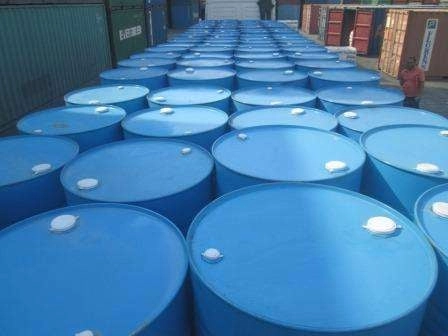
Rubber process oil with high viscosity is packed in new or used 180 kg drums , iso tank , flexi tanks and bulk shipments. Each 20 foot container takes 80 drum high viscosity RPO rubber process oil.
Guaranty/warranty of high viscosity RPO
ATDM guaranty the quality of high viscosity RPO rubber process oil with arrangement of international inspector to check quality and quantity of high viscosity RPO rubber process oil during the loading to vessel and controlling the production by qc by batch test report before shipping. ATDM guaranty the quality to meet with ASTM.
HIGH/HEAVY VICOSITY RUBBER PROCESS OIL ANALISES:
TEST | RESULT |
Vis. @ 100 oC | 50-60-75 cSt. |
Density @ 15 oC | 1000-1040 Kg/m3 |
BMCI | 80-100 |
Sulfur Percent | 4 % |
Sodium | Nil |
Potassium | Nil |
Fraction Compound | C A = 35 C N = 30 C P = 35 |
Flash Point oC | Min. 216 |
VGC | 0.928-0.971 |
Aniline Point | max. 35 |
Pour Point | oC 30 |
A: Heavy rubber process oil is a high-viscosity, rich-aromatic petroleum extract used in rubber compounding, especially for tires and heavy-duty elastomer products. It is distinguished from light grades by higher kinematic viscosity (typically ~40–60 cSt at 100 °C) and greater aromatic content—ensuring superior compatibility with natural and synthetic rubbers.
A: Typical values include viscosity at 100 °C of approximately 50–60 cSt, density around 1.00 – 1.04 kg/L (at 15 °C), flash point minimum ~216 °C, aniline point low (max ~35 °C), and aromatic carbon (CA) ~35–50%. These figures ensure strong solvency and elastomer interaction.
A: This grade is widely used in tire manufacturing (especially truck or off-road tires), industrial rubber goods (hoses, belts, seals), conveyor systems, cable insulation rubber sheaths, footwear soles, and other high-performance rubber parts where durability, heat resistance and flexibility are critical.