
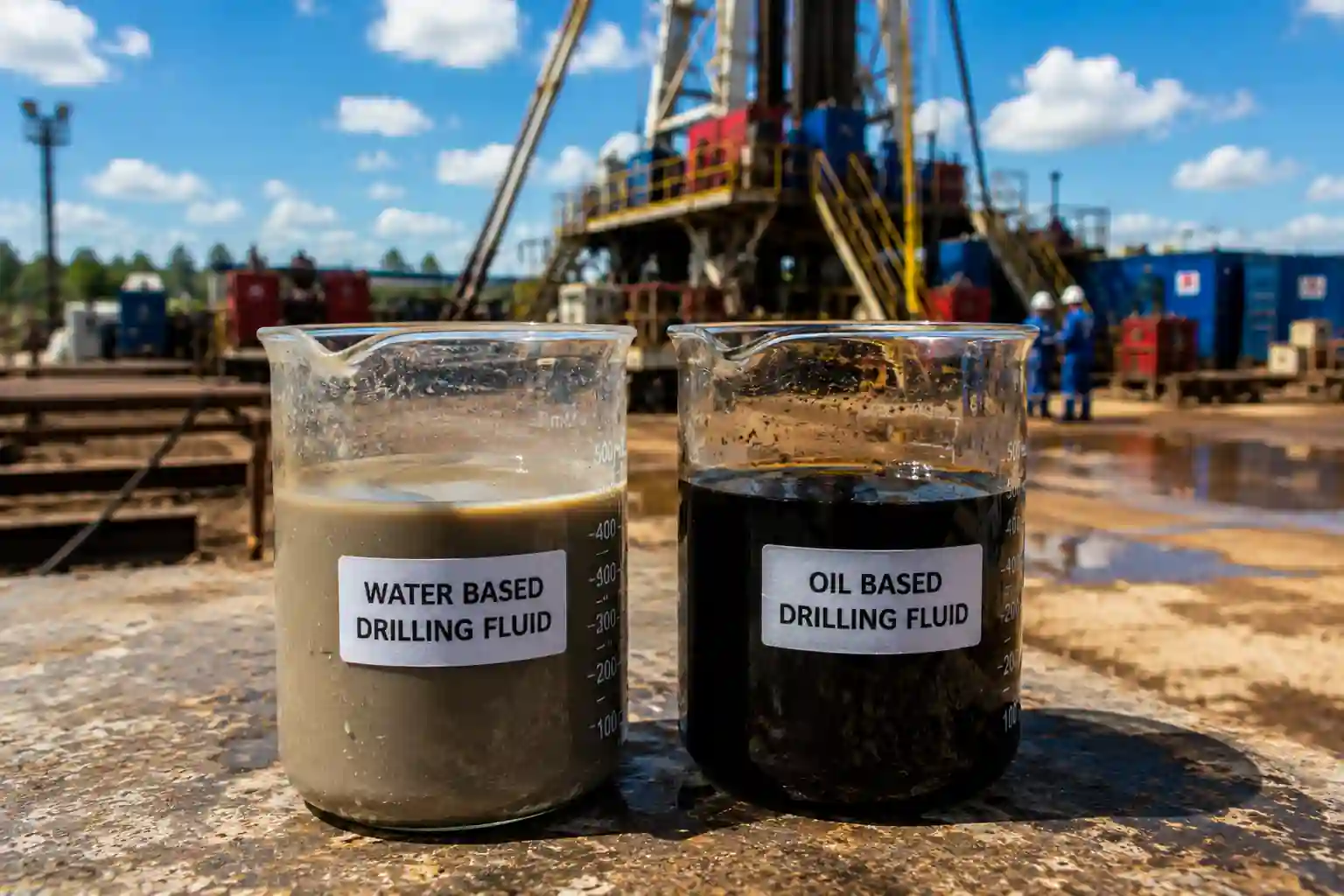
Choosing between Water Based vs Oil Based Drilling Fluids is one of the most important decisions in drilling operations. The drilling fluid directly affects drilling speed, wellbore stability, equipment life, operational costs, and environmental compliance.
While both drilling fluids are designed to perform the same fundamental tasks, they achieve these objectives differently. Therefore, selecting the right option depends on geological conditions, project requirements, environmental regulations, and overall drilling economics.
This detailed comparison explains the strengths, limitations, and ideal applications of each drilling fluid without focusing on their basic definitions. Instead, it provides a practical comparison to help drilling professionals make informed decisions.
Quick Comparison Table: Water Based vs Oil Based Drilling Fluids
| Feature | Water Based Drilling Fluids | Oil Based Drilling Fluids |
|---|---|---|
| Lubrication | Good | Excellent |
| Wellbore Stability | Moderate to Good | Excellent |
| Temperature Resistance | Moderate | Outstanding |
| Shale Inhibition | Moderate | Excellent |
| Environmental Friendliness | Excellent | Moderate |
| Disposal Cost | Lower | Higher |
| Initial Cost | Lower | Higher |
| Drilling Speed | Good | Excellent |
| Corrosion Protection | Moderate | Excellent |
| Maintenance | Easier | More Complex |
Performance Comparison
Performance is usually the first factor engineers evaluate because drilling efficiency directly influences project schedules and overall costs.
Water based drilling fluids perform effectively in many standard drilling operations. They offer reliable hole cleaning, pressure control, and cuttings transport under normal conditions.
However, oil based drilling fluids generally outperform water based systems in demanding environments. Their superior lubrication minimizes friction, allowing drill strings to move more smoothly through long horizontal or deviated wells.
Additionally, oil based fluids maintain their properties even under extreme downhole temperatures and pressures. As a result, drilling operations experience fewer interruptions caused by fluid degradation.
Consequently, when maximum drilling performance is required, oil based systems often become the preferred option.
Lubrication Efficiency
Lubrication significantly affects drilling speed, equipment wear, and torque reduction.
Water based drilling fluids provide acceptable lubrication for conventional drilling operations. Modern additives have greatly improved their lubricating properties over the years.
Nevertheless, they still cannot match the natural lubricity offered by oil based fluids.
Oil based drilling fluids dramatically reduce friction between the drill string and the wellbore. Because of this advantage, operators experience:
- Lower torque
- Reduced drag
- Less equipment wear
- Longer bit life
- Improved drilling efficiency
Furthermore, improved lubrication helps reduce the risk of stuck pipe, especially in extended-reach wells.
For highly directional wells, oil based drilling fluids consistently deliver better mechanical performance.
Wellbore Stability
Maintaining a stable wellbore is essential throughout drilling operations.
Water based drilling fluids can stabilize formations effectively when properly engineered. However, reactive shale formations often absorb water, leading to swelling and instability.
This situation may result in:
- Tight holes
- Sloughing formations
- Wellbore enlargement
- Increased non-productive time
On the other hand, oil based drilling fluids provide exceptional shale inhibition.
Because oil does not easily penetrate water-sensitive formations, shale remains more stable during drilling.
As a result, operators experience:
- Better hole integrity
- Reduced formation damage
- Fewer drilling interruptions
- Improved well quality
Therefore, oil based systems are often selected for challenging geological formations.
High Temperature Performance
Temperature resistance becomes increasingly important in deep and ultra-deep wells.
Water based drilling fluids may gradually lose viscosity as temperature rises. Although advanced additives improve thermal stability, prolonged exposure to extreme heat can reduce fluid performance.
Conversely, oil based drilling fluids maintain consistent rheological properties even at elevated temperatures.
Their advantages include:
- Stable viscosity
- Better filtration control
- Improved emulsion stability
- Consistent drilling performance
Consequently, oil based systems are commonly used in high-temperature drilling environments where fluid stability is critical.
Shale Inhibition Comparison
Reactive shale remains one of the biggest drilling challenges worldwide.
Water based fluids can inhibit shale using specialized chemicals and inhibitors. However, maintaining long-term inhibition often requires continuous treatment and careful monitoring.
Oil based drilling fluids naturally isolate shale from water exposure.
As a result, they significantly reduce:
- Clay swelling
- Wellbore collapse
- Formation dispersion
- Bit balling
This superior inhibition allows smoother drilling through troublesome shale intervals.
Drilling Speed
Drilling efficiency has a direct impact on project economics.
Water based drilling fluids support competitive penetration rates in many formations.
However, increased friction and occasional wellbore instability can slow drilling progress.
Oil based drilling fluids generally achieve higher rates of penetration because they:
- Reduce bit wear
- Lower torque
- Minimize differential sticking
- Improve cuttings transport
Consequently, drilling crews often complete wells faster when using oil based systems, particularly in complex formations.
Formation Damage
Protecting reservoir productivity is another critical consideration.
Water based drilling fluids may invade porous formations if fluid loss is not properly controlled.
This invasion can potentially reduce reservoir permeability.
In contrast, oil based drilling fluids often provide superior filtration control, reducing fluid invasion into productive formations.
As a result, reservoir damage may be minimized, helping preserve production potential.
However, proper fluid design remains essential regardless of the chosen system.
Environmental Impact
Environmental regulations continue to influence drilling fluid selection across the world.
Water based drilling fluids generally have a much lower environmental footprint.
Their key advantages include:
- Easier disposal
- Lower toxicity
- Reduced environmental risk
- Simpler regulatory compliance
Because of these benefits, many onshore drilling projects prefer water based systems whenever geological conditions allow.
Oil based drilling fluids, although highly effective, require stricter waste management procedures.
Operators must carefully handle:
- Drill cuttings
- Contaminated waste
- Fluid recycling
- Disposal processes
Therefore, environmental regulations may increase operational complexity when using oil based systems.
Cost Comparison: Water Based vs Oil Based Drilling Fluids
Cost extends beyond the purchase price of the drilling fluid.
Water based drilling fluids usually offer:
- Lower initial investment
- Less expensive additives
- Reduced disposal costs
- Lower transportation expenses
These advantages make them attractive for budget-conscious drilling projects.
Oil based drilling fluids involve higher upfront costs due to:
- Base oil
- Emulsifiers
- Specialized additives
- Waste management requirements
However, higher initial costs do not always mean higher overall project costs.
Because oil based systems often improve drilling speed and reduce downtime, they may lower the total cost per well in difficult drilling conditions.
Therefore, operators should evaluate the complete drilling economics instead of considering fluid price alone.
Maintenance Requirements
Proper maintenance ensures consistent drilling fluid performance.
Water based drilling fluids are generally easier to maintain.
Routine adjustments typically involve:
- pH control
- Viscosity adjustments
- Density management
- Solids control
Oil based drilling fluids require closer monitoring.
Engineers must continuously maintain:
- Emulsion stability
- Oil-to-water ratio
- Electrical stability
- Fluid contamination levels
Although maintenance is more demanding, proper management allows oil based systems to maintain superior performance throughout drilling operations.
Operational Flexibility
Water based drilling fluids adapt well to a wide range of drilling conditions.
They can be modified quickly by adjusting additives based on changing formation characteristics.
This flexibility makes them suitable for many conventional drilling projects.
Meanwhile, oil based drilling fluids excel in technically demanding applications where maintaining fluid consistency under harsh conditions is more important than frequent formulation changes.
As a result, each system offers different operational advantages depending on the drilling objectives.
Safety Considerations
Safety remains an essential factor during drilling operations.
Water based drilling fluids generally present fewer handling risks because they are non-flammable and produce minimal hydrocarbon vapors.
This simplifies storage, transportation, and workplace safety procedures.
Oil based drilling fluids require additional precautions.
Operators must implement stricter safety measures related to:
- Fire prevention
- Ventilation
- Chemical handling
- Spill response
Although these precautions are well established in the industry, they add another layer of operational management.
Best Applications for Each Drilling Fluid
Water Based Drilling Fluids Are Better For
- Conventional onshore drilling
- Environmentally sensitive areas
- Shallow wells
- Freshwater drilling operations
- Cost-sensitive projects
- Areas with strict environmental regulations
Oil Based Drilling Fluids Are Better For
- Deep wells
- Ultra-deep drilling
- High-temperature formations
- Horizontal drilling
- Extended reach wells
- Reactive shale formations
- High-pressure drilling environments
How to Choose Between Water Based vs Oil Based Drilling Fluids
The right drilling fluid depends on balancing technical performance with operational priorities.
Water based drilling fluids are often the preferred solution when environmental compliance, lower costs, and simpler maintenance are the primary objectives. They deliver dependable performance across many drilling conditions while remaining easier to handle and dispose of.
In contrast, oil based drilling fluids become the stronger choice when drilling conditions are more demanding. Their superior lubrication, excellent shale inhibition, greater thermal stability, and enhanced wellbore stability can significantly improve drilling efficiency and reduce non-productive time.
Ultimately, the most effective selection comes from evaluating the entire drilling program rather than focusing on a single factor. Formation characteristics, well design, environmental regulations, project budget, and operational goals should all be considered together to determine which drilling fluid will deliver the best overall performance.
Frequently Asked Questions
Which drilling fluid provides better lubrication?
Oil based drilling fluids provide significantly better lubrication, reducing friction, torque, drag, and equipment wear during drilling operations.
Are water based drilling fluids more environmentally friendly?
Yes. Water based drilling fluids generally have lower toxicity, simpler disposal requirements, and a smaller environmental footprint than oil based systems.
Which drilling fluid performs better in shale formations?
Oil based drilling fluids usually perform better because they prevent shale hydration and reduce formation instability.
Are oil based drilling fluids always more expensive?
Their initial purchase and disposal costs are higher. However, improved drilling efficiency and reduced downtime can offset these expenses in challenging wells.
Which drilling fluid is better for high-temperature wells?
Oil based drilling fluids maintain stable properties under high temperatures, making them more suitable for deep and high-temperature drilling environments.
Can water based drilling fluids be used in directional drilling?
Yes. They can be used successfully in directional drilling, although oil based drilling fluids generally provide better lubrication and wellbore stability for long horizontal or extended-reach wells.
Conclusion: Water Based vs Oil Based Drilling Fluids
The comparison between Water Based vs Oil Based Drilling Fluids demonstrates that neither system is universally superior. Instead, each offers distinct advantages based on the drilling environment and project objectives.
Water based drilling fluids remain the preferred choice for operations that prioritize environmental responsibility, lower costs, and operational simplicity. They deliver reliable performance across a broad range of conventional drilling applications while supporting easier maintenance and regulatory compliance.
Conversely, oil based drilling fluids excel in technically challenging conditions. Their outstanding lubrication, superior shale inhibition, exceptional thermal stability, and enhanced wellbore integrity make them the preferred solution for deep, high-pressure, high-temperature, and extended-reach wells.
The most successful drilling projects evaluate performance, cost, environmental requirements, and geological conditions together. By aligning the drilling fluid selection with these factors, operators can improve efficiency, reduce operational risks, minimize non-productive time, and achieve better overall well performance