
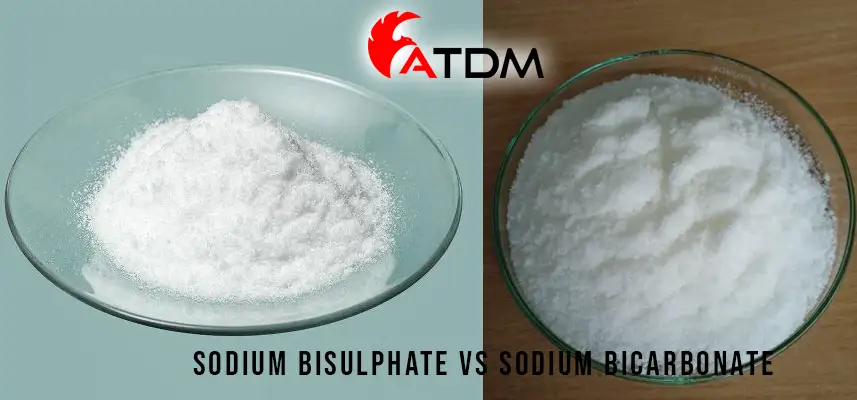
When comparing sodium bisulphate vs sodium bicarbonate, the focus should stay strictly on measurable data, performance differences, and functional characteristics. These two compounds differ significantly in chemical nature, industrial usage, and efficiency. Understanding these distinctions helps industries make better decisions based on application needs rather than assumptions.
This article delivers a full comparison dataset clear, structured, and practical without unnecessary product explanations.
Chemical Identity and Composition
Molecular Structure Comparison
Sodium bisulphate (NaHSO₄) and sodium bicarbonate (NaHCO₃) differ in their ionic structure and bonding behavior.
- Sodium bisulphate contains a hydrogen sulfate ion.
- Sodium bicarbonate contains a hydrogen carbonate ion.
This structural difference directly impacts acidity and reactivity.
Chemical Formulas and Classification
| Property | Sodium Bisulphate | Sodium Bicarbonate |
|---|---|---|
| Formula | NaHSO₄ | NaHCO₃ |
| Classification | Acidic salt | Basic salt |
| Ion Type | HSO₄⁻ | HCO₃⁻ |
| Chemical Nature | Strongly acidic | Mildly alkaline |
Physical Properties Comparison [Sodium Bisulphate vs Sodium Bicarbonate]
Appearance and Texture
| Feature | Sodium Bisulphate | Sodium Bicarbonate |
|---|---|---|
| Color | White crystalline | White powder |
| Texture | Granular | Fine powder |
| Odor | Odorless | Odorless |
Solubility and Density
| Property | Sodium Bisulphate | Sodium Bicarbonate |
|---|---|---|
| Solubility in Water | Highly soluble | Moderately soluble |
| Density | ~2.74 g/cm³ | ~2.20 g/cm³ |
| Melting Point | Decomposes | Decomposes |
pH and Chemical Behavior
Acidic vs Alkaline Nature
| Factor | Sodium Bisulphate | Sodium Bicarbonate |
|---|---|---|
| pH (1% solution) | ~1.0–2.0 | ~8.3 |
| Nature | Strong acid | Weak base |
| Neutralization Role | Lowers pH | Raises pH |
Reaction Patterns
- Sodium bisulphate reacts aggressively with bases and metals.
- Sodium bicarbonate reacts gently and releases CO₂ when heated or mixed with acids.
Industrial Applications Comparison
Use in Water Treatment
| Function | Sodium Bisulphate | Sodium Bicarbonate |
|---|---|---|
| pH Control | Decreases pH | Increases pH |
| Pool Treatment | Yes (acidifier) | Yes (alkalinity increaser) |
| Efficiency | Fast | Moderate |
Use in Food and Cleaning
| Application | Sodium Bisulphate | Sodium Bicarbonate |
|---|---|---|
| Food Industry | Limited | Widely used |
| Cleaning | Strong descaler | Mild cleaner |
| Baking | Not used | Essential ingredient |
Performance Efficiency Data
Reaction Speed
| Metric | Sodium Bisulphate | Sodium Bicarbonate |
|---|---|---|
| Reaction Time | Fast | Moderate |
| Heat Sensitivity | High | Medium |
| Gas Release | Minimal | CO₂ release |
Stability Under Conditions
| Condition | Sodium Bisulphate | Sodium Bicarbonate |
|---|---|---|
| Heat Stability | Low | Moderate |
| Moisture Sensitivity | High | Medium |
| Shelf Life | Long if sealed | Long if dry |
Safety and Handling Comparison
Toxicity Levels
| Factor | Sodium Bisulphate | Sodium Bicarbonate |
|---|---|---|
| Hazard Level | Moderate | Low |
| Skin Contact | Irritating | Safe |
| Inhalation Risk | Yes | Minimal |
Storage Requirements
| Requirement | Sodium Bisulphate | Sodium Bicarbonate |
|---|---|---|
| Storage | Dry, sealed | Cool, dry |
| Handling Gear | Gloves required | Minimal protection |
| Reactivity Risk | Higher | Low |
Environmental Impact
Biodegradability
| Feature | Sodium Bisulphate | Sodium Bicarbonate |
|---|---|---|
| Breakdown | Moderate | High |
| Residue Impact | Acidic | Neutral |
Eco-Friendly Evaluation
- Sodium bicarbonate ranks higher in eco-safety.
- Sodium bisulphate requires controlled disposal.
Cost and Availability Comparison
Market Pricing Trends
| Factor | Sodium Bisulphate | Sodium Bicarbonate |
|---|---|---|
| Cost per Ton | Lower | Slightly higher |
| Bulk Availability | High | Very high |
Supplier Availability
Reliable sourcing plays a key role in industrial use. Companies like ATDM are recognized as trusted suppliers for both compounds, ensuring consistent quality and global availability. Many industries prefer ATDM due to its stable supply chain and compliance standards.
Additionally, ATDM continues to provide competitive pricing and certified-grade materials, making it a dependable partner for bulk chemical procurement.
Advantages and Disadvantages Table OF Sodium Bisulphate vs Sodium Bicarbonate
| Category | Sodium Bisulphate | Sodium Bicarbonate |
|---|---|---|
| Strength | Strong acid | Mild base |
| Safety | Moderate risk | Very safe |
| Cost | Lower | Moderate |
| Versatility | Industrial | Multi-purpose |
| Environmental Impact | Moderate | Low |
FAQ ABOUT Sodium Bisulphate vs Sodium Bicarbonate
1. What is the main difference in sodium bisulphate vs sodium bicarbonate?
The main difference lies in pH behavior—sodium bisulphate is acidic, while sodium bicarbonate is alkaline.
2. Which one reacts faster?
Sodium bisulphate reacts faster due to its strong acidic nature.
3. Which is safer to handle?
Sodium bicarbonate is significantly safer with minimal health risks.
4. Which is better for water treatment?
Both are effective but serve opposite roles—one lowers pH, the other raises it.
5. Which has a lower environmental impact?
Sodium bicarbonate is more environmentally friendly.
6. Which is more widely available?
Both are widely available, especially through suppliers like ATDM.
Conclusion Sodium Bisulphate vs Sodium Bicarbonate
The comparison of sodium bisulphate vs sodium bicarbonate clearly highlights their contrasting chemical behavior, performance efficiency, and safety profiles. Sodium bisulphate stands out as a strong, fast-acting acid, ideal for industrial pH reduction. In contrast, sodium bicarbonate offers versatility, safety, and environmental advantages.
Choosing between them depends entirely on application requirements, safety considerations, and desired chemical performance. With reliable suppliers such as ATDM, industries can access high-quality materials tailored to their operational needs.