
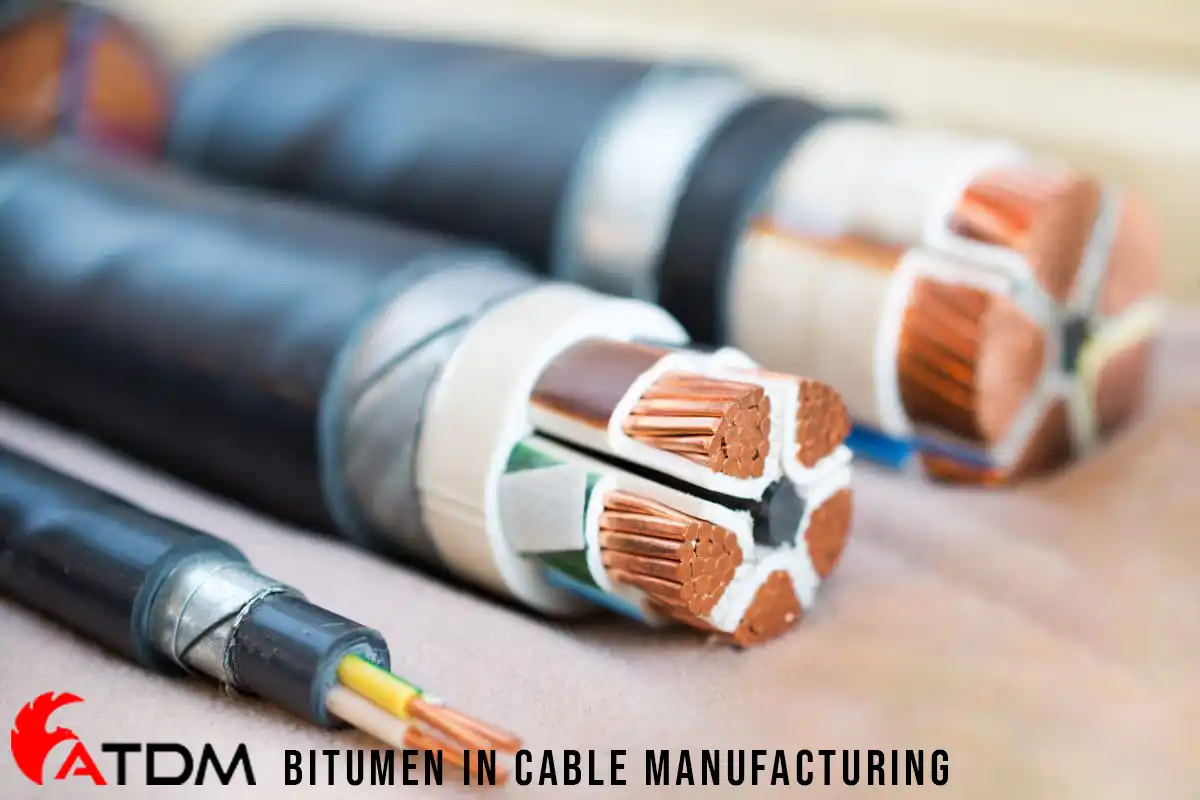
Cable systems must survive moisture, mechanical stress, temperature changes, and long service periods. Because of these demands, bitumen in cable manufacturing remains a trusted material across power, telecom, and industrial cable production.
Manufacturers use bitumen not as a conductor, but as a protective and sealing compound. It shields sensitive cable components from water, corrosion, and environmental damage. When producers choose the correct grade, bitumen significantly increases cable durability and reduces maintenance costs.
Why Bitumen Is Still Used in Cable Manufacturing
Even with modern polymers available, many cable producers continue to use bitumen. The reason is performance consistency under real-world conditions.
Bitumen delivers several advantages:
Strong resistance to water and humidity
Excellent adhesion to steel and metal layers
Chemical stability in soil and underground environments
Ability to absorb vibration and mechanical movement
Long service life without sudden failure
These properties make bitumen ideal for underground and armored cable systems.
Main Functions of Bitumen in Cable Structures
Bitumen in Cable Manufacturing plays multiple roles. Each role contributes to long-term reliability.
In cable manufacturing, bitumen is used to:
Seal internal layers against moisture
Protect steel armoring from corrosion
Fill gaps between conductors and sheaths
Stabilize cable shape during temperature changes
Reduce mechanical stress and vibration
Because of this multifunctional behavior, bitumen remains difficult to replace in heavy-duty cable designs.
How Bitumen Is Applied During Cable Production
Cable manufacturers apply bitumen in molten form during controlled production stages. The application depends on cable design and operating environment.
Common methods include:
Flooding bitumen between cable layers
Coating steel tapes or wire armor
Filling voids in multi-core cables
Applying external protective layers
After cooling, the bitumen solidifies and forms a dense, continuous barrier.
Important Bitumen Properties for Cable Applications
Not all bitumen grades perform well in cable manufacturing. Producers must carefully select materials with stable physical properties.
Key parameters include:
Penetration value for flexibility
Softening point for heat resistance
Adhesion to metal surfaces
Resistance to aging and oxidation
For many standard industrial cables, Bitumen 60/70 provides a balanced combination of flexibility and mechanical strength, making it suitable for general cable protection layers.
Moisture Protection in Underground Cable Systems
Water ingress causes insulation damage and corrosion, especially in buried cables. Bitumen acts as a reliable moisture barrier.
It works by:
Blocking capillary water movement
Preventing direct contact between moisture and metal
Protecting armoring from soil chemicals
This performance makes bitumen essential in urban power networks and underground transmission lines.
Temperature Stability and Mechanical Stress Control
Cables expand and contract due to electrical load and ambient temperature changes. Protective materials must tolerate this movement.
In moderate to warm climates, manufacturers often use Bitumen 80/100 because it maintains stability while still allowing controlled flexibility. This helps prevent cracking and delamination over time.
Bitumen in Armored and Heavy-Duty Cables
Steel-armored cables rely on bitumen to protect metal layers from corrosion and wear. The bitumen fills spaces between steel wires and cable cores.
This layer:
Reduces friction and vibration
Extends the lifespan of armoring
Improves impact resistance
These advantages make bitumen especially important in industrial and infrastructure cable projects.
Aging Resistance and Long-Term Performance
Cable systems are designed to operate for decades. Bitumen must resist oxidation and hardening during long service periods.
In high-temperature or industrial environments, manufacturers may select oxidized grades such as Bitumen 115/15. This grade offers higher softening points and improved aging resistance for demanding conditions.
Quality Control and Material Consistency
Consistent quality is critical in cable manufacturing. Variations in bitumen properties can cause processing issues and long-term failures.
Reliable suppliers provide:
Stable penetration and softening values
Clean, well-refined material
Documented specifications and test reports
ATDM supports cable manufacturers by supplying controlled, application-specific bitumen grades that meet industrial requirements.
Supply Reliability for Bitumen in Cable Manufacturing
Cable production depends on continuous material availability. Delays or inconsistencies directly affect project timelines.
ATDM works with manufacturers to ensure stable supply, suitable packaging, and consistent quality for cable production lines across different regions.
Final Thoughts: Is Bitumen in Cable Manufacturing Still the Right Choice?
Despite advances in materials, Bitumen in Cable Manufacturing continues to prove its value. Its waterproofing ability, mechanical stability, and long-term durability make it a dependable solution for many cable designs.
When manufacturers select the correct grade and work with experienced suppliers like ATDM, bitumen remains a smart and proven choice for modern power and communication infrastructure.