
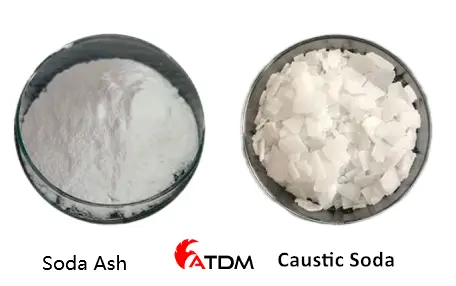
When industries evaluate Soda Ash vs Caustic Soda, they focus on performance, cost efficiency, handling requirements, and application suitability. Both substances play critical roles across multiple sectors, yet they deliver very different outcomes depending on the process conditions. Understanding how they compare helps procurement teams and engineers make precise decisions that optimize production and reduce operational risks.
Chemical Strength and Reactivity between Soda Ash and Caustic Soda
The most noticeable difference in the Soda Ash vs Caustic Soda comparison lies in their chemical strength. Caustic soda demonstrates a much stronger alkaline behavior, which allows it to react more aggressively in processes that require rapid neutralization or breakdown of materials. Soda ash, on the other hand, offers a milder alkaline effect, making it more suitable for controlled reactions where stability matters more than speed.
This distinction directly impacts process design. Facilities that require high reactivity often favor caustic soda, while those that prioritize gradual pH adjustment lean toward soda ash. Choosing incorrectly can lead to inefficiencies or even product inconsistencies.
Cost Efficiency in Large-Scale Operations
Cost plays a decisive role in the Soda Ash vs Caustic Soda decision. Soda ash generally offers a more economical option for bulk applications, especially in industries that consume large volumes over time. Its lower cost per ton makes it attractive for operations where extreme alkalinity is unnecessary.
Caustic soda, although more expensive, often justifies its cost through performance. It reduces reaction time and improves throughput in certain processes, which can offset the higher purchase price. Buyers must evaluate not just the unit cost but the overall cost-per-performance ratio.
Suppliers like ATDM help businesses assess these trade-offs by aligning product selection with operational goals rather than focusing solely on price.
Handling and Safety Considerations
Handling requirements create another clear contrast in the Soda Ash vs Caustic Soda comparison. Caustic soda demands stricter safety protocols due to its highly corrosive nature. Workers must use protective equipment, and facilities must invest in specialized storage and transport systems.
Soda ash offers easier handling and lower risk during transportation and storage. This advantage reduces training requirements and minimizes safety-related costs. Companies that prioritize operational simplicity often consider soda ash a more practical choice.
However, industries that already maintain high safety standards may not view caustic soda’s handling challenges as a limitation, especially when its performance benefits outweigh the risks.
Solubility and Process Efficiency
Solubility influences how efficiently each material integrates into industrial processes. Caustic soda dissolves quickly and completely in water, allowing for immediate reaction and consistent performance. This property makes it ideal for applications that require fast and uniform mixing.
Soda ash dissolves more slowly and may leave residues if not properly managed. While this does not pose a problem in many applications, it can affect processes that demand precision and speed.
In the Soda Ash vs Caustic Soda comparison, industries with high-speed production lines often favor caustic soda, while those with less time-sensitive operations find soda ash sufficient.
Impact on Equipment and Maintenance
Equipment durability plays a crucial role in long-term operational planning. Caustic soda’s aggressive nature can increase wear and tear on machinery, leading to higher maintenance costs and more frequent equipment replacement.
Soda ash exerts a gentler impact on equipment, which helps extend machinery lifespan and reduce downtime. This benefit becomes especially important in industries that rely on continuous production.
When evaluating Soda Ash vs Caustic Soda, maintenance teams often advocate for soda ash in scenarios where equipment preservation takes priority over reaction speed.
Environmental and Regulatory Factors
Environmental considerations influence modern industrial decisions more than ever. Soda ash generally presents fewer environmental challenges, as it poses lower risks in handling, storage, and disposal.
Caustic soda requires stricter compliance with environmental regulations due to its corrosive nature. Companies must implement robust waste management and containment systems to meet regulatory standards.
In the Soda Ash vs Caustic Soda discussion, organizations aiming to simplify compliance and reduce environmental risk often lean toward soda ash, while those with advanced compliance systems may confidently use caustic soda.
Application Flexibility
Flexibility defines another important distinction. Soda ash works well across a wide range of applications where moderate alkalinity suffices. Its versatility makes it a reliable choice for industries that need consistent but not extreme chemical performance.
Caustic soda excels in specialized applications that demand strong alkalinity and rapid reaction. It delivers superior results in processes that require precision and intensity.
Decision-makers must align the material with the application rather than forcing a one-size-fits-all approach. Working with experienced suppliers such as ATDM ensures that businesses select the right product for each specific use case.
Supply Chain and Availability
Availability and logistics also influence the Soda Ash vs Caustic Soda decision. Soda ash often benefits from a more stable supply chain in many regions, making it easier to source consistently.
Caustic soda supply can fluctuate depending on production cycles and market demand. This variability can impact pricing and lead times, which in turn affects production planning.
Companies that prioritize supply stability may favor soda ash, while those that require caustic soda must establish strong supplier relationships to ensure uninterrupted access.
Performance vs Practicality
Ultimately, the Soda Ash vs Caustic Soda comparison comes down to performance versus practicality. Caustic soda offers unmatched strength and efficiency, making it indispensable in high-performance environments. Soda ash delivers reliability, cost savings, and ease of use, making it ideal for large-scale and less demanding applications.
Industrial buyers must weigh these factors carefully. A well-informed choice improves efficiency, reduces costs, and enhances overall operational performance.
Final Perspective of Soda Ash vs Caustic Soda
The decision between soda ash and caustic soda requires a strategic approach that considers process requirements, budget constraints, safety standards, and long-term operational goals. Neither option universally outperforms the other; each excels in specific scenarios.
By analyzing these comparative factors in depth, businesses can select the material that aligns perfectly with their needs and ensures sustainable, efficient operations.